For decades, scientists and non-scientists alike have been fascinated by the phenomenon of Monarch migration.
Questions about where the Monarchs travel, how long they stay at their destination and how they survive the winter have been the focus of countless scientific studies.
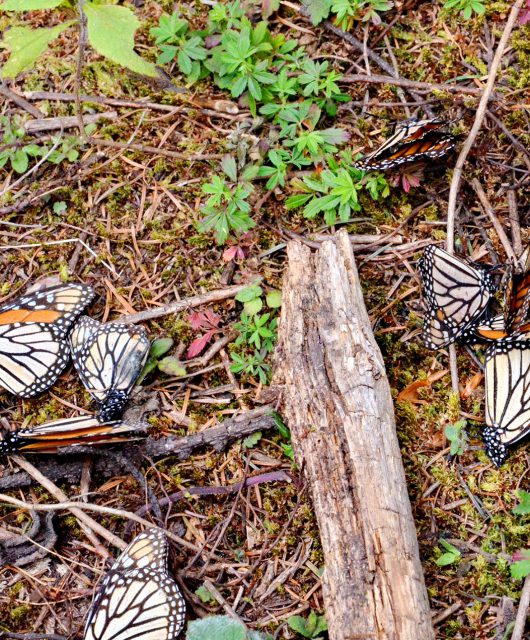
Thanks to research conducted by scientists, knowledge shared by Indigenous communities and contributions from community scientists over the years, we know that migratory Monarchs originating in Canada travel thousands of kilometres to their overwintering sites in the Oyamel Fir forests of Mexico.
However, there is still much to learn about the routes they take and the habitats they depend on along the way, and recent technological advancements are helping researchers answer these important questions.
Tiny Tracking Tags
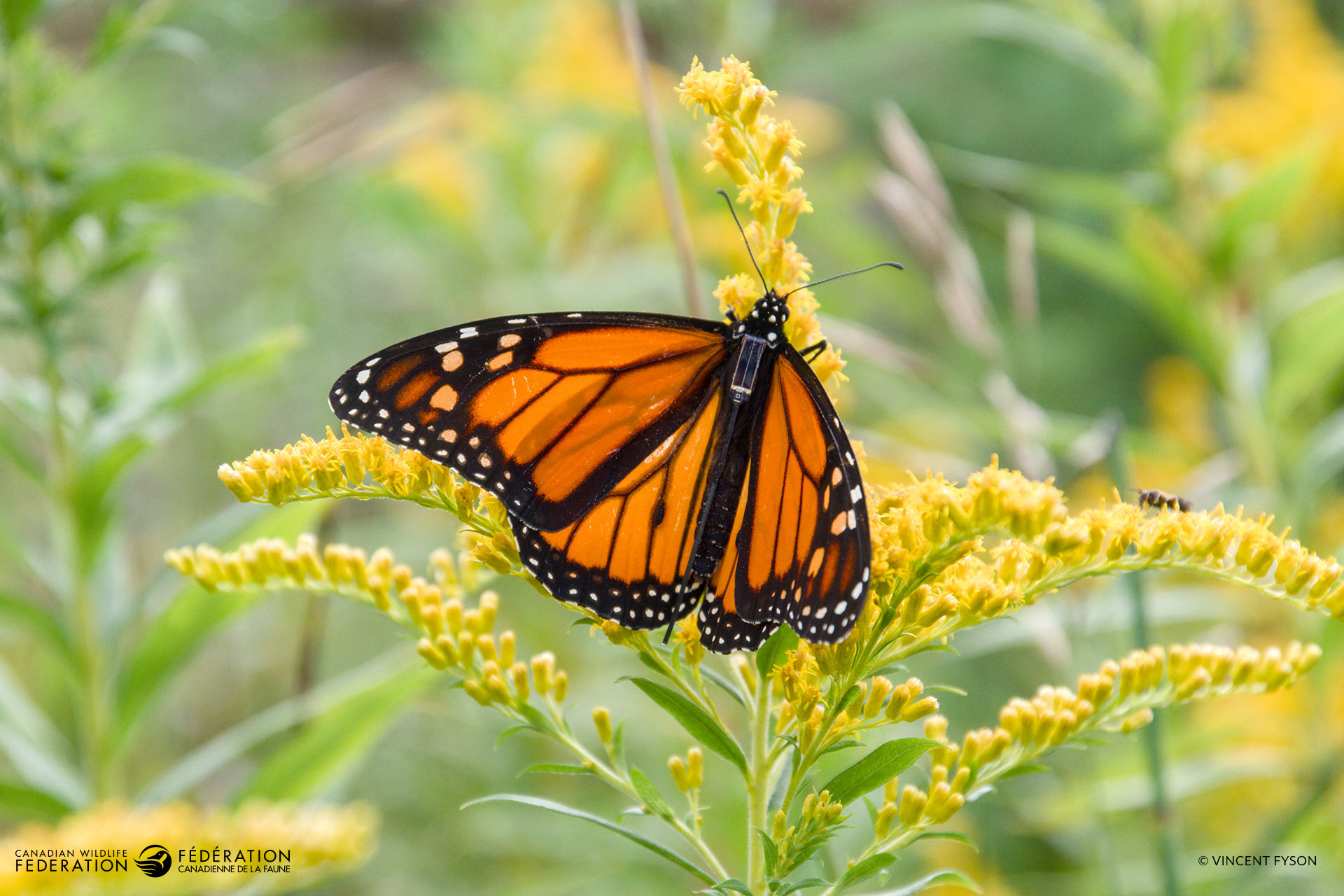
One of these new technologies is the BluMorpho tracking tag. Equipped with tiny solar panels and antennas that use Bluetooth technology to communicate with nearby cellphones, the tags provide valuable information that can help researchers better understand Monarch migration.
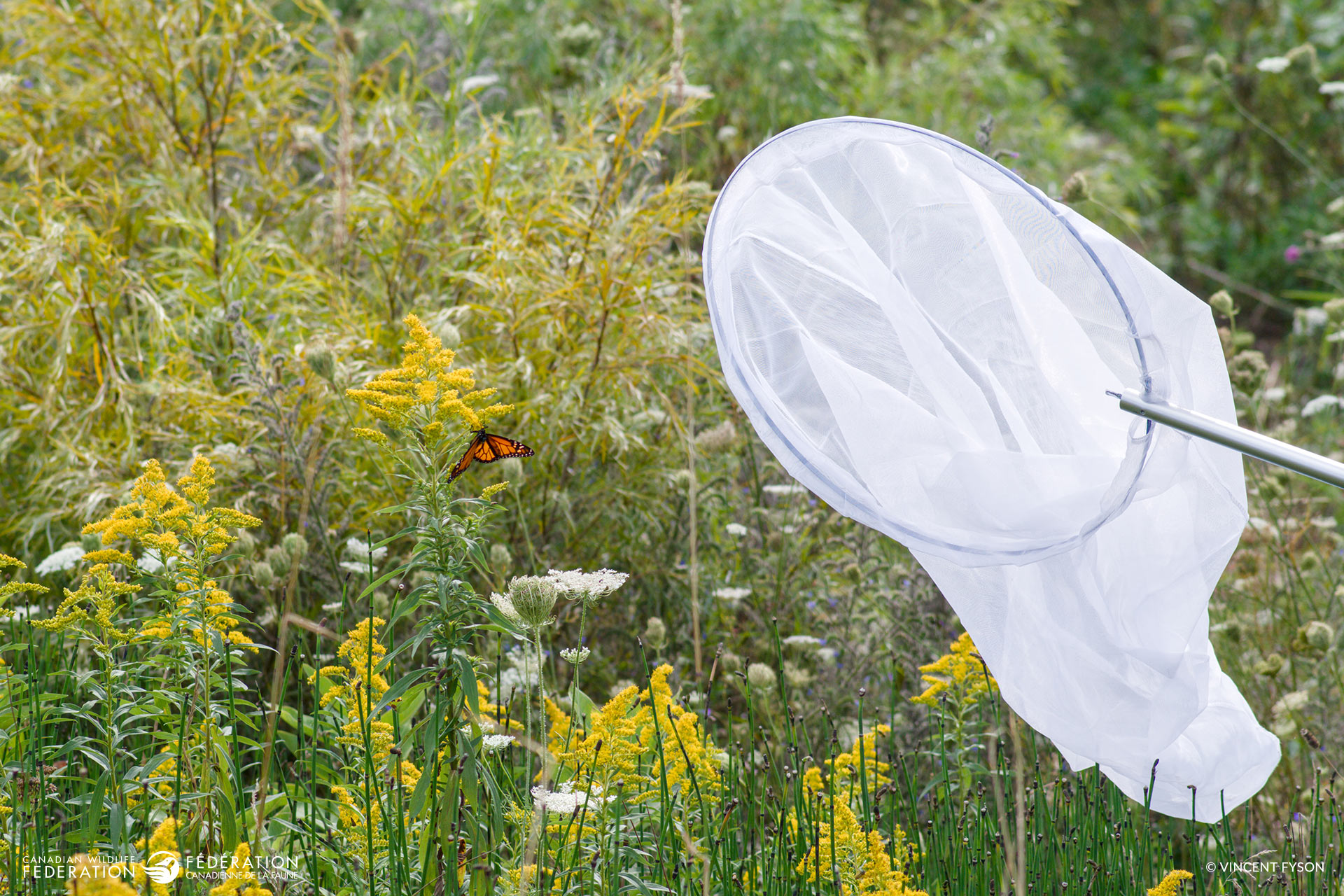
This summer, Canadian Wildlife Federation (CWF) researchers, alongside researchers from Environment and Climate Change Canada (ECCC) and the University of Ottawa, worked together to fit Monarchs with these tiny solar-powered tags on Manitoulin Island and Prince Edward County. This project is currently part of a pilot study. Over the coming years, CWF will expand the program to continue asking and answering important questions about the Monarchs’ journey. The information gathered will help support conservation efforts across their migratory range.
Following the Journey of a Migrating Monarch
Manitoulin Island
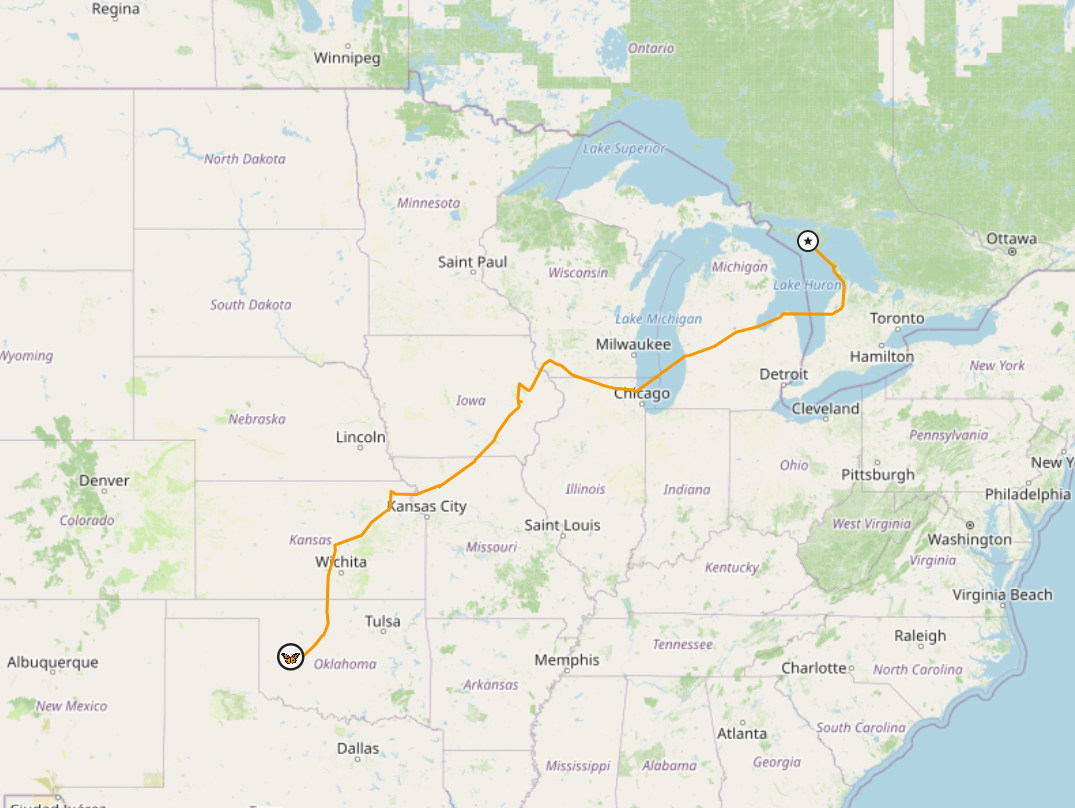
A male Monarch was one of 32 tagged at the end of August, at Providence Bay Beach on Manitoulin Island.
His Flight Path
- ➜ August 29, 2026: Cool, rainy weather kept him on the Island for several days before he crossed to the Bruce Peninsula where he was detected nine times from August 29 to September 2, 2026.
- ➜ September 3, 2026: He traveled south before making another impressive flight across Lake Huron the following day. He appeared to spend the night at Port Crescent State Park on the shores of Lake Huron in Michigan.
- ➜ Over the next two days, the Monarch traveled through the state. He was detected on the west side of Lake Michigan before entering Illinois on September 7, 2026.
- ➜ He then made a brief detour north into Wisconsin, where he remained until September 9, 2026 when he turned southwest and headed through Iowa.
- ➜ After spending three days crossing Iowa, he zipped through northwestern Missouri in less than a day.
- ➜ His journey continued across Kansas over the next six days, before he eventually reached Oklahoma, where he was last detected on September 22, 2026.
Prince Edward County
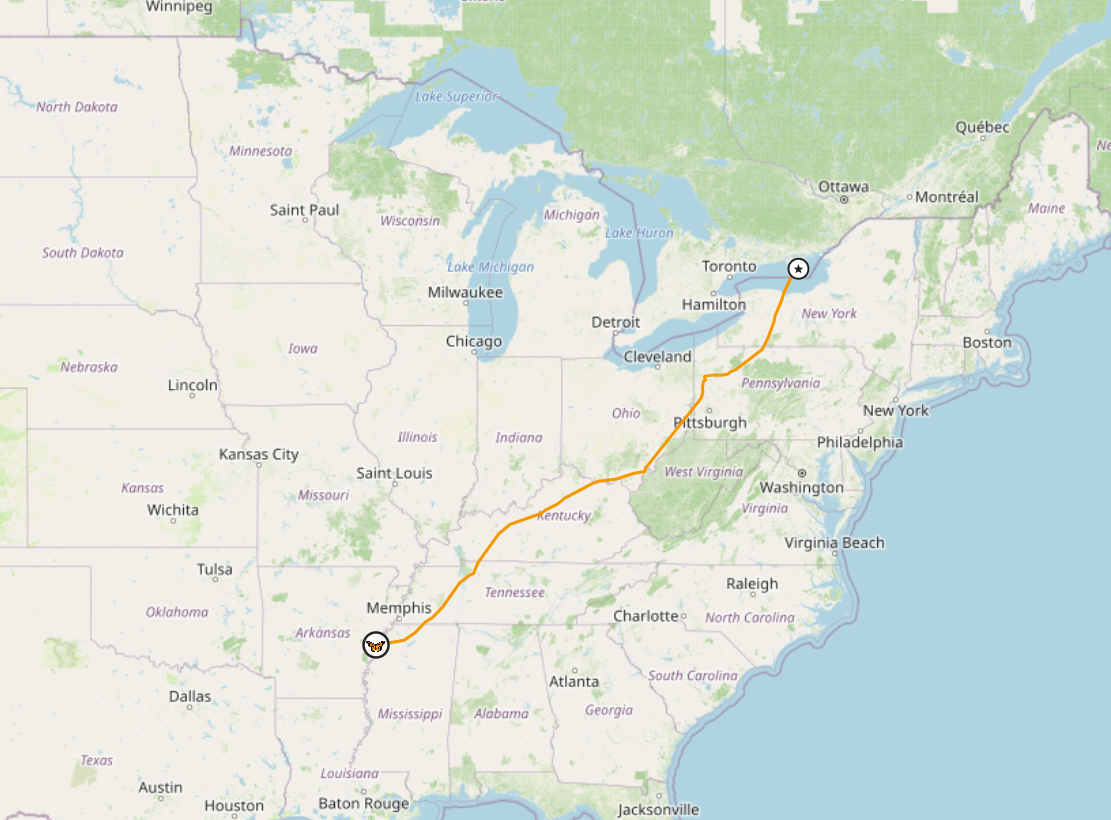
A female Monarch was one of 30 others tagged on September 16 and 17 2026, along the south shore of Prince Edward County. She remained in the area for about a day before setting off on the next stage of her southbound migration.
Her Flight Path
- ➜ On September 18, 2026 she is aided by strong winds from the North, making the impressive crossing over Lake Ontario. She was detected near Rochester, New York.
- ➜ She continued south, spending the evening in Pennsylvania before travelling west into Ohio. Between September 20 and 22, 2026 she disappeared from detection, leaving a brief gap in her journey.
- ➜ She was later detected along the banks of the Ohio River.
- ➜ From there, she traveled southwest across Kentucky spending several nights along the shores of the Ohio and Cumberland Rivers along the way.
- ➜ Her trip through Tennessee took just two days and on September 27, she quickly crossed northwest Mississippi before continuing into Arkansas. She was last detected on September 28 in eastern Arkansas.
Understanding Gaps in the Journey
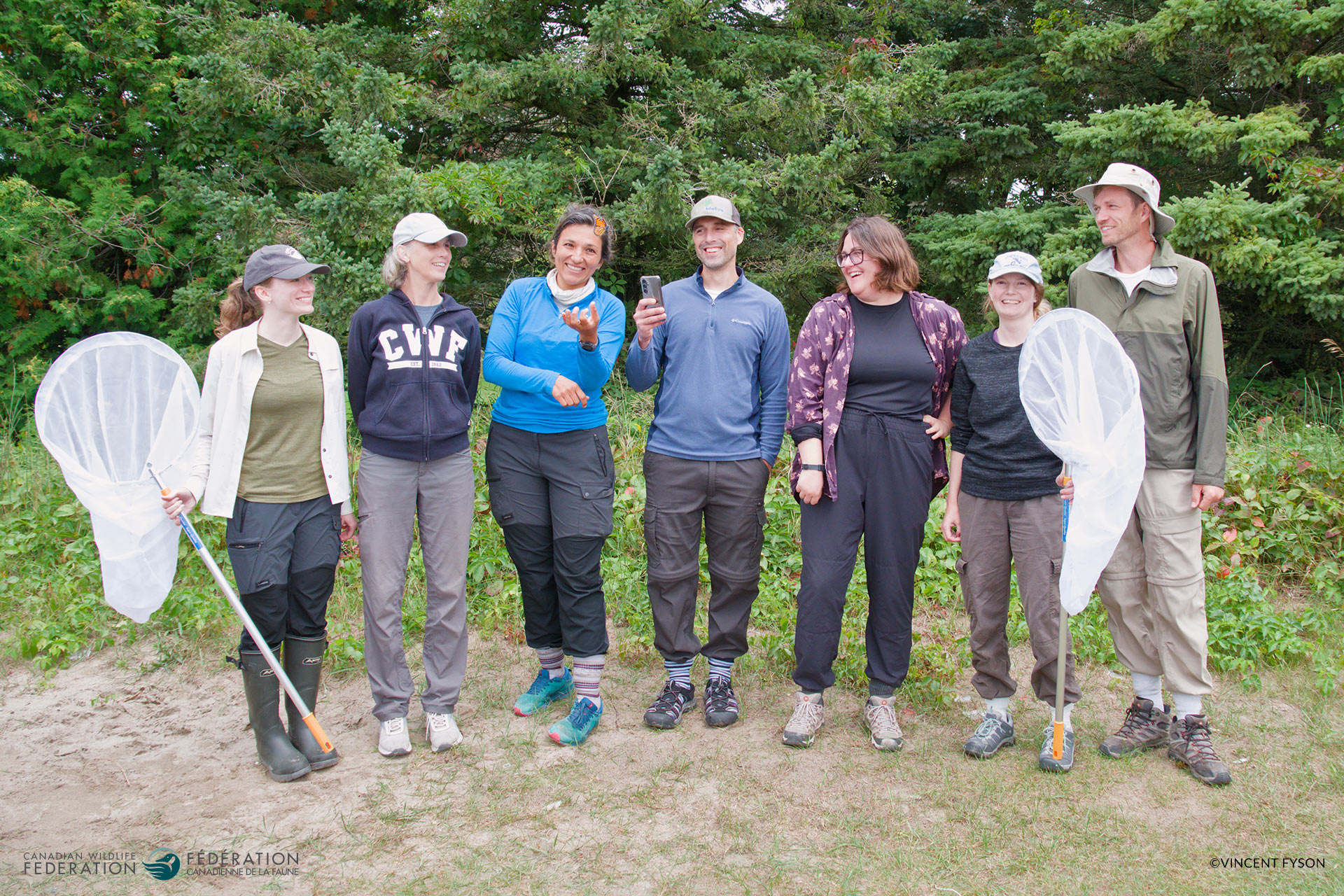
Periods without detection do not necessarily mean a Monarch has stopped migrating. Researchers remain hopeful that the Manitoulin Island Monarch will also be detected again and continue his journey towards Mexico. While it is possible that the Monarch could have been predated, and the tag sitting in the belly of a Merlin or a Black-headed Grosbeak, it’s also possible that the tag could have fallen off, or that the Monarch is flying through rural areas where there are no phones to pick up the signal, or it’s too cloudy and rainy for the Monarch to open its wings for travel.
We are excited to continue these collaborative efforts to keep learning more about Monarchs, their migration patterns and the best ways that we can support their extraordinary journeys.
Since the date that this blog was written, there have been exciting developments on the Monarch migration. Stay tuned for the next blog to find out more.

Katherine Peel
Katherine Peel is a terrestrial conservation project coordinator at the Canadian Wildlife Federation working in both the grasslands awareness and rights-of-way as pollinator habitat programs.