The Canadian Wildlife Federation’s Marine Conservation Science team works to mitigate entanglement risk to large whales.
In Atlantic Canada, there is a particular focus on North Atlantic Right Whales — a critically endangered species with a population of approximately 384 individuals. North Atlantic Right Whales are a migratory species found primarily along the Northeastern coast of Canada and the United States.
Entanglement in the vertical ropes, called buoylines, used in fixed-gear fisheries such as crab and lobster have been identified as the main cause of death and injury to North Atlantic Right Whales. One of the measures implemented by Fisheries and Oceans Canada to mitigate entanglement in these fisheries are time-area fishery closures. Time-area closures are activated when a North Atlantic Right Whale is detected, and no fishing gear is allowed in a defined area around the detected whale.
Although time-area closures are an effective way of preventing entanglement, fishing area closures can have serious financial implications for fish harvesters and coastal communities. On-demand fishing gear provides harvesters with the opportunity to continue fishing operations in the presence of North Atlantic Right Whales.
How On-demand Fishing Gear Helps Marine Wildlife
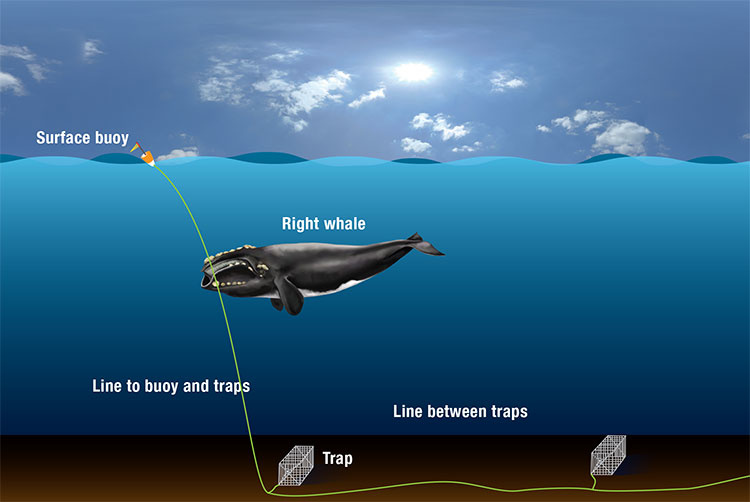
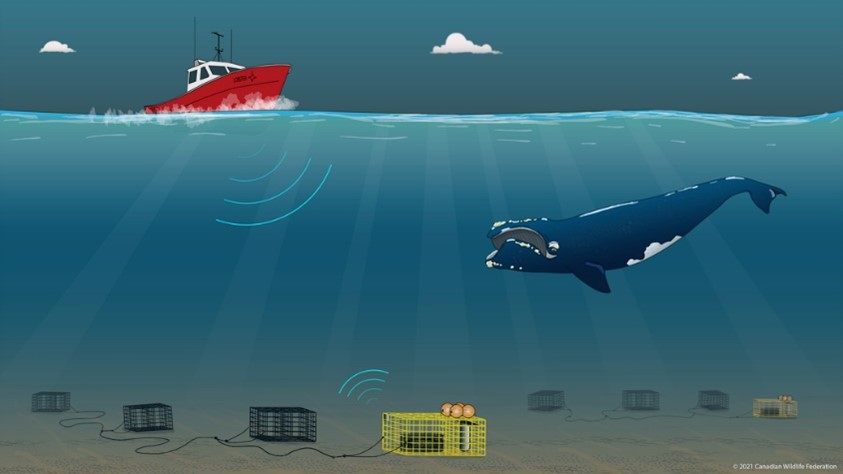
Also referred to as ‘ropeless’ or ‘pop-up gear’, on-demand fishing gear is an innovative technology that removes the persistent buoyline from the water column by keeping the buoyline at the seafloor. When a harvester is ready to haul their gear and collect their catch, an acoustic signal triggers the on-demand fishing gear system to release the buoyline, where the harvester can retrieve their gear as normal. As there aren’t persistent buoylines, on-demand fishing gear allows harvesters to fish in areas closed to traditional gear with buoylines to protect North Atlantic Right Whales.
Based in Halifax, N.S., the CanFISH Gear Lending Program is the first and largest lending program for adaptive fishing gear in Canada. CanFISH is equipped with over 175 on-demand fishing gear systems and a team of trained and skilled technicians that provide on-demand fishing gear and training for crab and lobster harvesters throughout the Maritimes. The program aims to support harvesters experiencing fisheries closures and reduce barriers to accessing on-demand fishing gear.
There are two types of on-demand fishing gear systems available through CanFISH:
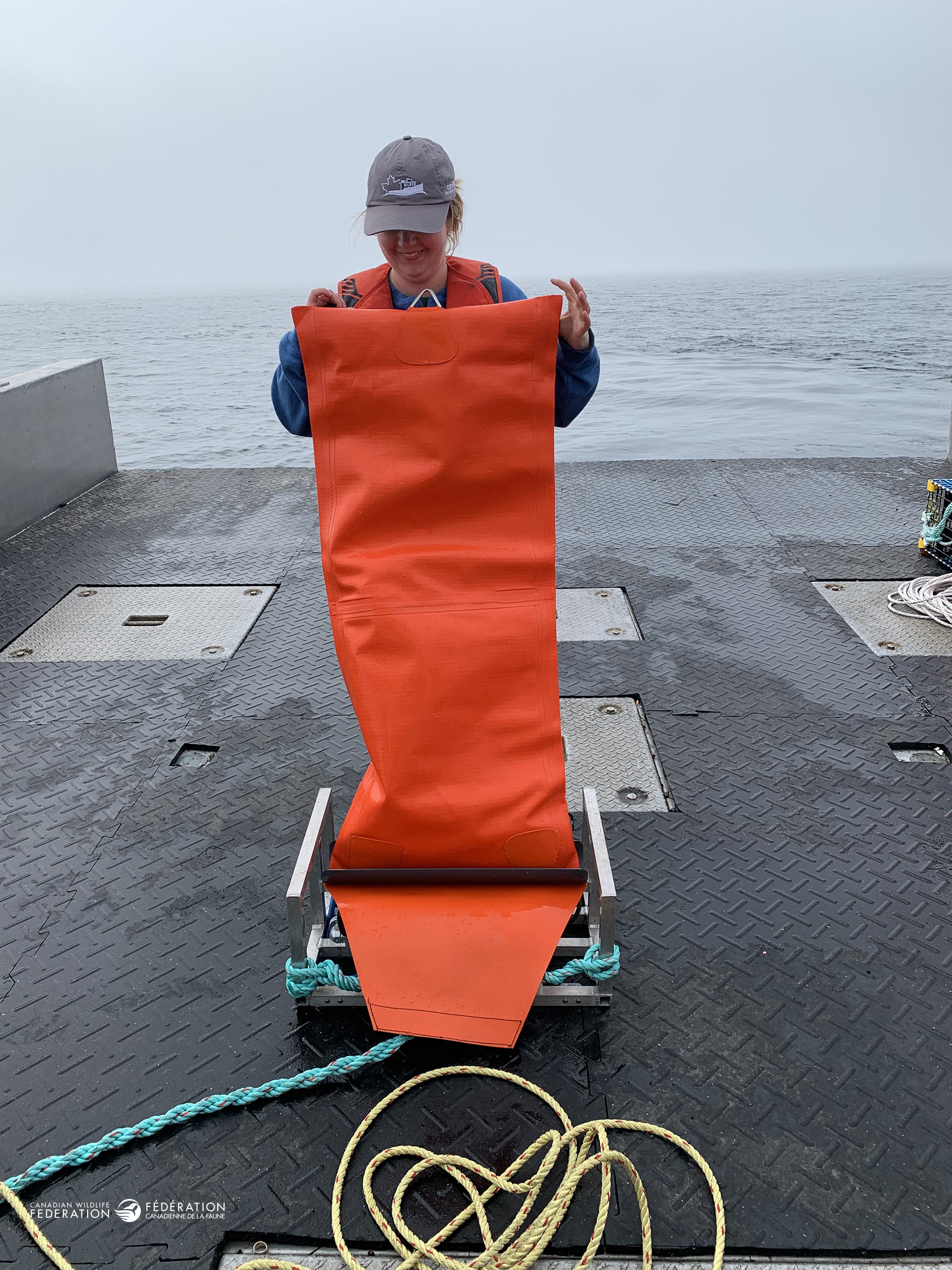
- A lift-bag system, where compressed air inflates a bag, bringing the buoyline to the surface.
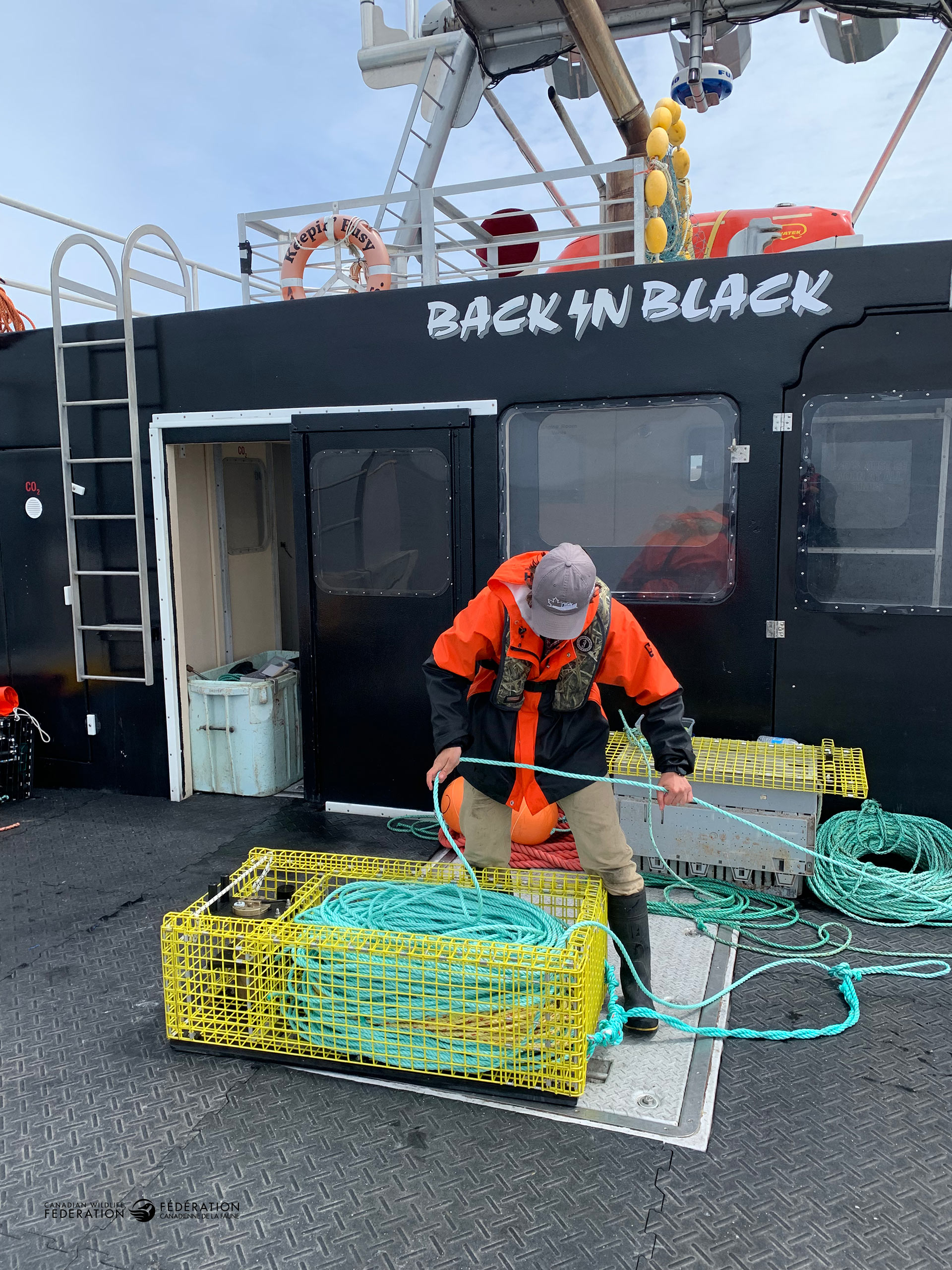
- A rope containment system, where the buoyline is held at depth in a bag, cage or on a spool. When the system is released, the rope uncoils and is brought to the surface by attached buoys.
The continuous efforts of the CanFISH Gear Lending Program demonstrate both the need and interest for on-demand fishing technology as an available and affordable tool when faced with North Atlantic Right Whale closures. Through years of engagement, the Canadian Wildlife Federation team has established strong collaboration with harvester partners and fishing associations that continue to inform and guide our program and expose the commercial fishing industry to alternatives to traditional gear.
Earlier this year, Fisheries and Oceans Canada released Canada’s Whale Safe Fishing Gear Strategy, which details how on-demand fishing gear will be used as a tool to support sustainable fishing practices. Gear lending programs such as CanFISH are important in this development, as they alleviate the barriers of access to on-demand fishing gear by providing the gear, training and knowledge to use it effectively during a closure, all across the Maritimes.
As long as large whales such as North Atlantic Right Whales frequent Atlantic Canadian waters and fishery closures continue to occur, harvesters should have the opportunity to utilize on-demand fishing gear to co-exist with whales.
Learn more about how the Canadian Wildlife Federation is helping marine species and wildlife.

Alex Cole
Alex Cole works with CWF’s Marine Team in Halifax, N.S. as a Fisheries Management Evaluation Specialist focusing on understanding the risk commercial fisheries produce for Canada’s large whales. Originally from B.C., she worked in zoological animal care and in the whale watching industry, where she expanded her knowledge of animal behaviour and the importance of conservation education, before following her passion of whale conservation to the East Coast. When not talking about whales, she can be found ocean-side, hiking, or snuggling her cat with a good book.