Ranching and grasslands conservation go hand in hand.
Ranchers contribute to make Canada’s grasslands biodiverse and viable. To recognize the 2026 International Year of Rangelands and Pastoralists’ theme for the month of October, Pastoralist Women, we’ve asked Canadian rancher Mindy Hockley-Anderson seven questions about lessons, experiences and roles of women in ranching in Canada.
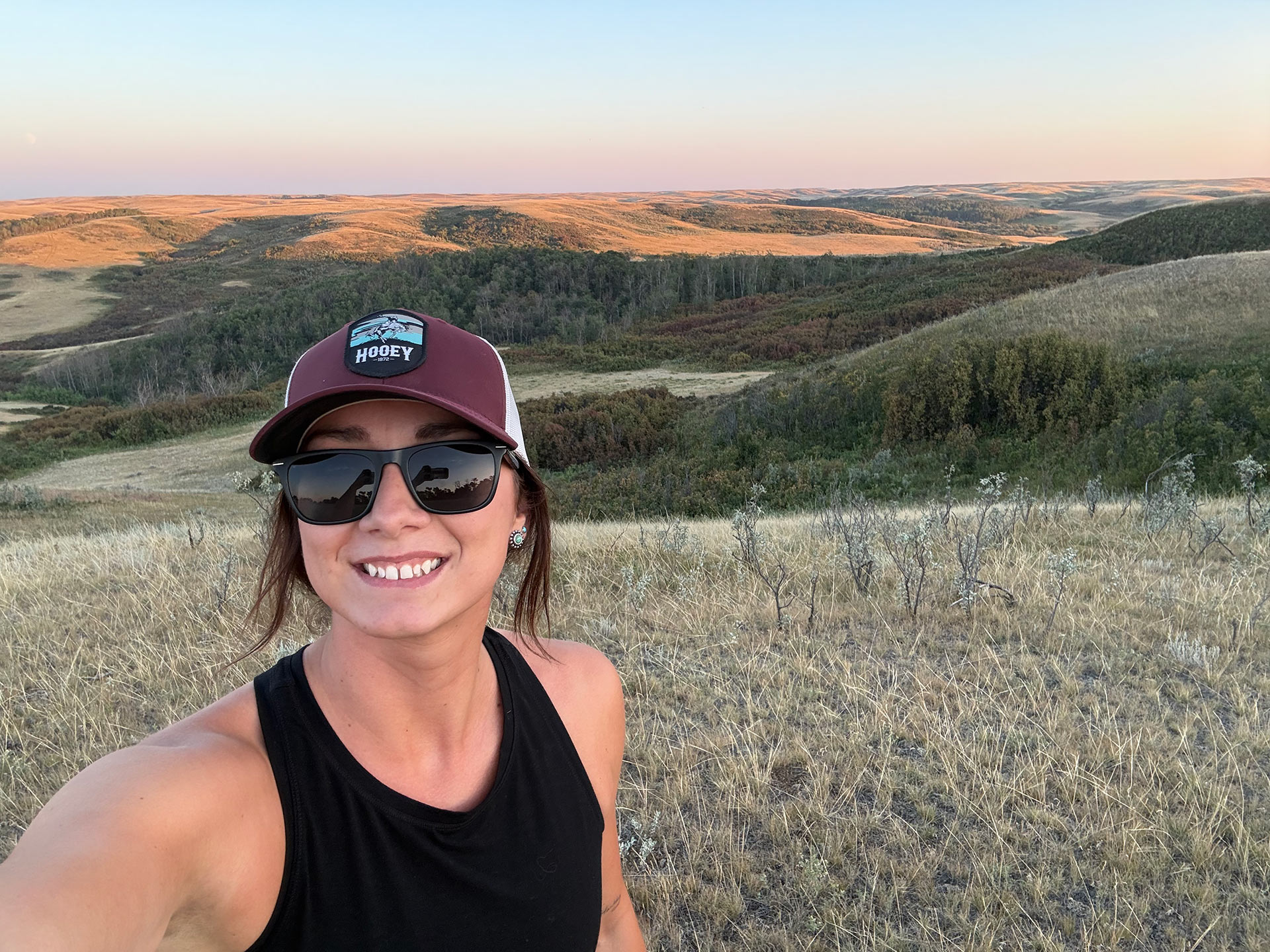
Mindy grew up on a small ranch in southeast Saskatchewan, where she developed a passion for the ranching industry and caring for the land. She pursued a career as a Registered Veterinary Technologist and spent 10 years working in rural mixed-animal practice. In 2022, she joined the Saskatchewan Stock Growers Foundation as the Communications Specialist, bringing together two of her passions: ranching and native grasslands.
Mindy lives with her husband on his family’s generational ranch near Fir Mountain, SK, where she helps out in her spare time. She also remains actively involved in her own family’s ranching operation, keeping her connected to the realities, challenges and opportunities facing Saskatchewan ranchers.
Q1: How would you explain ranching to women who have only seen it in movies?
Ranching in movies only showcases a small portion of what really happens. It’s as if you zoom in on a picture to one single tiny detail and cut out everything else happening. Ranching is a thousand little jobs that need to be done and never enough time to get to them all. From fencing to putting up feed, early mornings moving cattle where they need to go, monitoring for sickness in the herd, equipment breakdowns, one quick job that turns into an all-day affair and all while being at Mother Nature’s mercy.
Ranching tends to be an art that is run like a business. The decisions we’re making daily require us to balance a lot of moving pieces. We’re managing livestock well-being, rangeland health, water supply, wildlife habitat and still trying to make a living in volatile markets. Every decision is connected to another, and there’s rarely a one-size-fits-all answer. What works one year may not work the next and we need to be adaptable to remain viable in the industry.
There’s a lot of skill, knowledge and problem-solving behind the scenes, and understanding ranching means understanding the challenges that come with trying to make a living while caring for the land and livestock at the same time.
Q2: What’s the biggest misconception about women in ranching?
I think the biggest misconceptions about women in ranching are that they are rarely the decision makers and that the work they do isn’t important. Ranching has historically been a male-dominated industry but there have always been women breaking that barrier, operating ranches and being the main decision makers. Even if she is not the one on horseback moving the cows or treating a sick animal, she is behind the scenes doing work that is necessary and just as hard. Having meals ready to go, making sure bills are paid, driving ahead in the truck to open gates or going back to check on the newborn calf back at home. Women ranchers are truly equals with their partners, despite what job each person is doing on a given day, they are contributing to overall viability of that ranch.
Q3: Women have always played leading roles in ranching, though their contributions have often been overlooked. What is one lesson or value passed down by the women who came before you that shapes how you ranch today?
I think one value that I never forgot was to be useful before being impressive. Sometimes doing the unglamorous work well will set you apart from someone that is trying to do something impressive. Showing up every day willing to learn and working with grit will take you farther than big flashy showcases of your skills. Excellence is typically quiet. Some of the smartest ranching women I’ve met are the quietest. They show up, do their work and do it well without the need for feedback or praise.
Q4: As someone who works within the ranching community for grassland conservation, what unique knowledge have you gained about caring for grasslands, wildlife, and ecosystems that you think everyone should know?
I don’t think it’s unique, but I do believe it is important for everyone to know that these grassland landscapes are nuanced and require great care to properly manage. Most of the knowledge surrounding management of grasslands has been passed down for generations and no two ranches or management styles are the same. There is no one-size-fits-all management method. We need all the different approaches to keep these grasslands healthy, and we need to support our ranchers that are spending every day on the land caring for it.
Ranchers are managing the landscape to account for multiple factors, including animal health, pasture health and wildlife habitat that co-exist on the grasslands. Ranchers take great pride in their land stewardship and understand firsthand that if they aren’t keeping the land in good condition, it not only reflects poorly on their bottom line but impacts the well-being of livestock and wildlife that rely on it. We are only the caretakers of the land for a very short period of time, and we always want to leave it better than we found it.
Q5: Many Canadian ranchers work alongside Indigenous communities, conservation organizations and other land managers. How have partnerships or shared learning strengthened your approach to stewardship and caring for the land?
I believe that there is always something to learn from someone. Everyone has slightly different approaches to each situation and being open to hearing how others are managing their land and how that relates to their stewardship values can be a great way to learn another approach you may not have considered, build connections and grow your community. Even if someone else’s approach may not be 100 per cent applicable to what you can try on your ranch, you might be able to incorporate small changes from what they are doing to improve your own management.
Q6: What would help more women take on leadership roles in ranching, rangeland management and agricultural decision-making in Canada?
I think there has already been a large influx of women stepping into leadership roles within agriculture and they have shown the younger generation that there is room for everyone at the head tables. Women in agriculture cannot be afraid to carve their own path and ask hard questions. Ranching gives you roots but that doesn’t mean you are stuck either. You can ranch and pursue other interests whether it comes to policy, environmental concerns, rangeland health roles and advocate for what you feel is important in the industry. There is always room to learn and grow within agriculture, but you cannot be afraid of feedback or listening to new ideas. There are a lot of great mentorship programs emerging that women can take part in to build a greater sense of community and create more connections that can send you in a direction you never thought was possible.
Q7: What’s your message for the next generation of women interested in ranching, pastoralism, or land stewardship?
My message for women interested in ranching and land stewardship is to not be afraid to take risks or ask questions. You cannot grow your knowledge or skill set, both with practical hands-on and communication skills, if you don’t put yourself in new situations that allow for growth. Create a community filled with people of similar values that you can lean on and want to see your success. Whether that community is two people or ten people, ranching is a hard enough industry. There is no point going through those difficult times alone. Having a community that you can lean on is important.
Authors:
Mindy Hockley-Anderson
Mindy is a Communications Specialist at the Saskatchewan Stock Growers Foundation and is involved in her family ranching operation as well as her husband’s family’s generational ranch in Saskatchewan, where she lives.
Katherine Peel
Katherine Peel is a terrestrial conservation project coordinator at the Canadian Wildlife Federation working in both the grasslands awareness and rights-of-way as pollinator habitat programs.

CWF-FCF
Our mission is to conserve and inspire the conservation of Canada’s wildlife and habitats for the use and enjoyment of all.