Part of the mint family, Wild Bergamot is a hardy perennial found across much of Canada.
Its scientific name, Monarda fistulosa, honours the 16th century Spanish physician botanist Nicolas Bautista Monardes, who never travelled to the Americas yet became one of its most enthusiastic chroniclers. Fascinated by the plants arriving off cargo ships from the New World, he studied dozens of species for their medicinal properties. The species name “fistulosa” comes from the Latin word for “tubular” — a reference to the plant’s pipe-like petals. Known most commonly as Wild Bergamot, it also goes by Bee Balm and Horsemint.
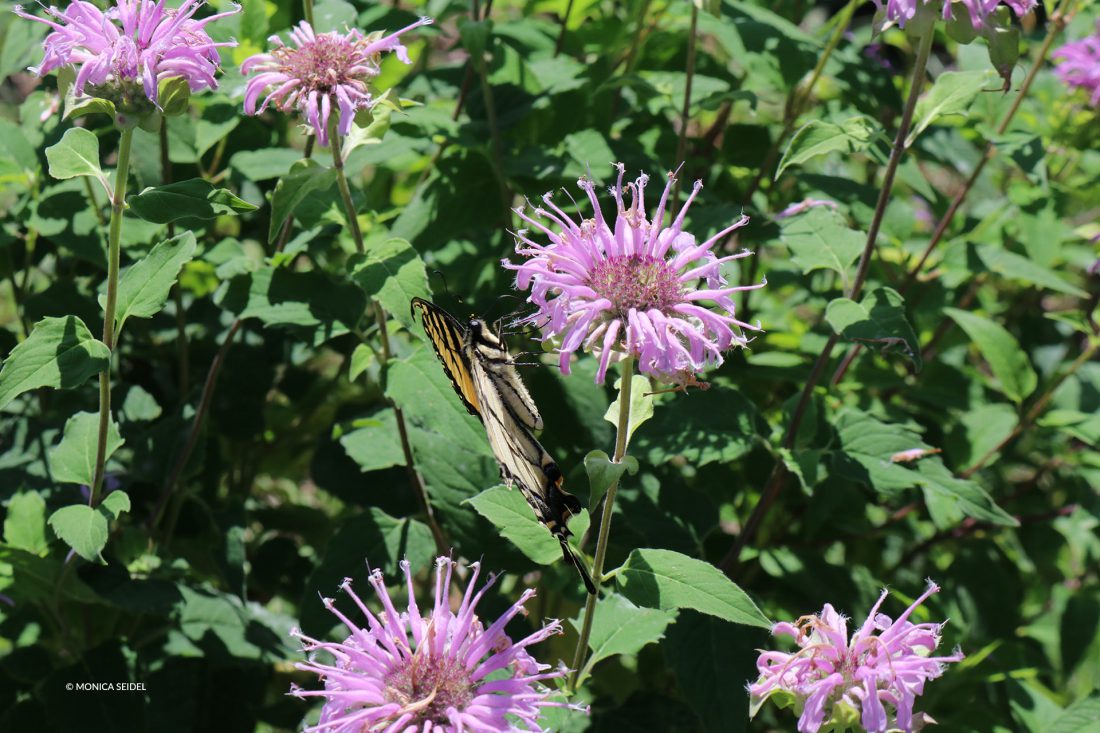
Wild Bergamot grows wild in grasslands, woodland edges and thickets, along roadsides and in wet meadows. It can be found growing across an array of provinces from British Columbia to Quebec. It is a hardy plant, tolerating a variety of soil both moist and dry be it clay, sandy or lime, and flourishes in full sun.
In the summer, lavender-pink tubular flowers burst open like small pompoms, standing atop stems approximately a metre tall. The leaves are typically smooth on top and hairy underneath — if you brush against them, you’ll catch a minty scent.
Beyond its beauty, Wild Bergamot plays an important ecological role. Its bloom period, stretching from midsummer to September, provides a sustained food source for pollinators. Long-tongued bees, butterflies, hummingbirds and hummingbird moths are drawn to its nectar, as are predatory wasps that help keep garden pests in check. It is a valuable nectar source for the Monarch Butterfly, an endangered pollinator that is at risk in part due to the loss of sources of nectar across its range, making this native bloom even more important. Come fall and winter, American Goldfinches flock to the dried seedheads, picking them clean of seeds.
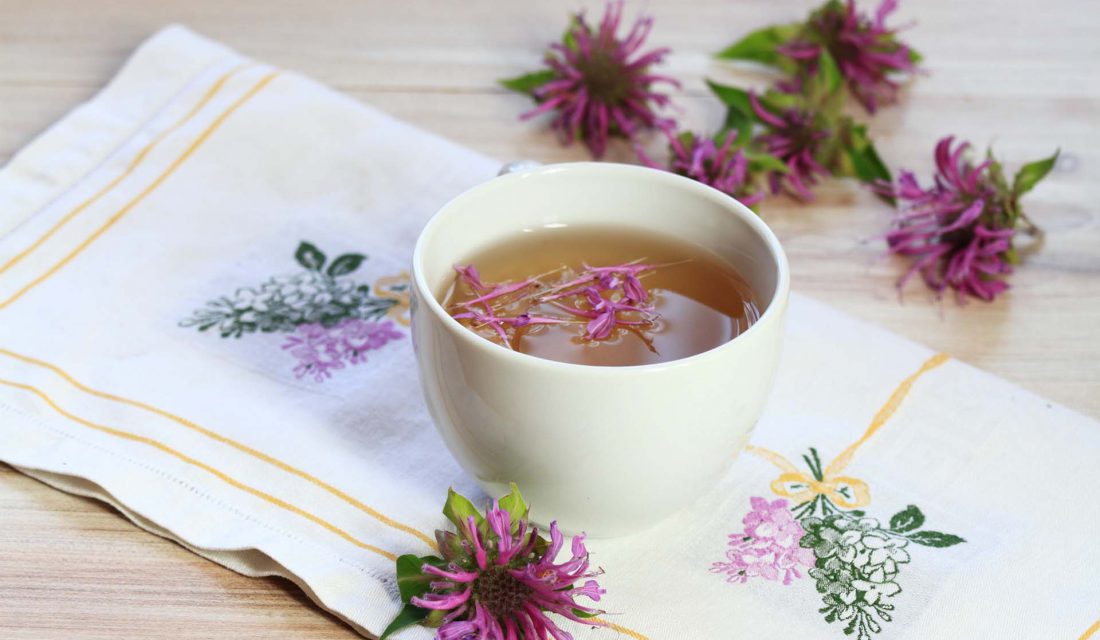
Gardeners prize Wild Bergamot for its hardiness and like that it is a manageable addition to the garden, spreading slowly, unlike some of its more aggressive cousins. Its aromatic leaves can also be steeped to make a lovely tea!
Before you plant Wild Bergamot in your garden, one small caveat: Wild Bergamot can develop powdery mildew on its leaves. While the mildew won’t harm the flower, you can keep it in check by ensuring there’s enough space around it for proper air circulation, watering at the base of the plant rather than on its leaves and planting in full sun.
Author: Mary Whittaker, Canadian Wildlife magazine, July/August 2026

Sarah Coulber
Sarah is an Education Specialist at the Canadian Wildlife Federation. She writes about the benefits and ‘how-to’s’ of wildlife-friendly gardening, coordinates content for the Gardening for Wildlife web section, co-manages the wildlife-friendly demonstration gardens at CWF headquarters and assists Canadians looking to achieve similar results with their own properties.