
Brr, it’s cold outside!
It’s February in Canada which means much of this country is covered in snow, air temperatures are chilly and lakes and ponds are covered with ice. And while many of us may be cozied up by a fire or wrapped in a blanket; beneath the icy, cold waters there’s still a flurry of activity taking place. Activity that for some species, we’re still learning about. This may be especially true for insects!
In a study that was just published in 2025, researchers looked at ice-covered ponds in Nova Scotia. They found that all major insect taxa, including beetles, mayflies and caddisflies, were active in the winter. It seems the cold doesn’t slow down some insects at all. Some beetles, for instance, appeared to swim around as if it was a sunny, balmy day. This study brings new insight into winter insect activity, an area that remains largely underexplored and one that requires more research.
Roaming Reptiles
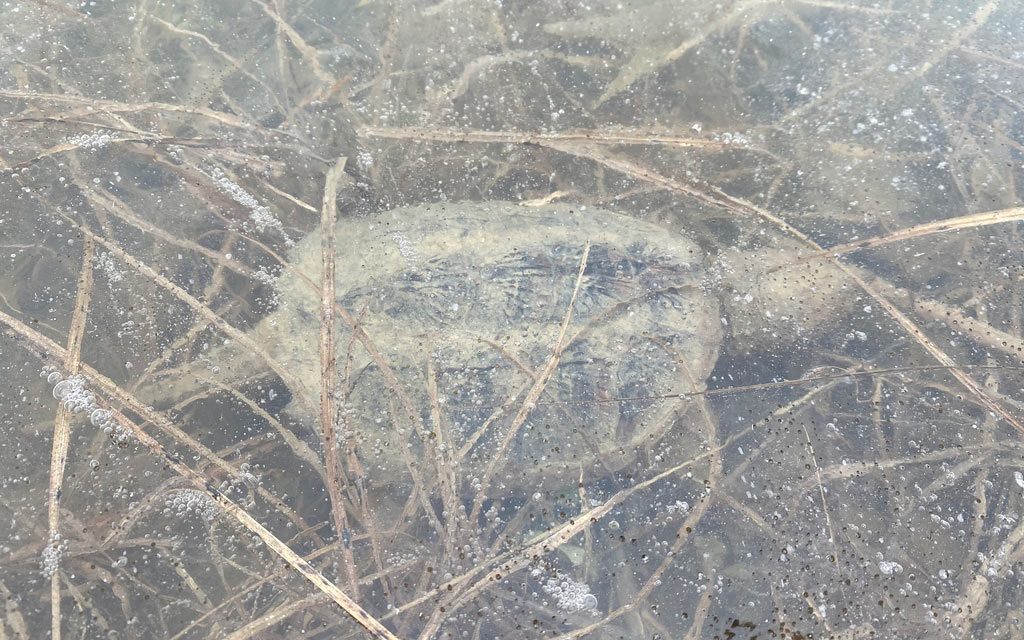
While some freshwater turtles like Snapping Turtles and painted turtles go dormant in the winter, Northern Map Turtles continue to take daily, local excursions. That’s right – they keep moving, even under ice. Why? Researchers believe it’s so they can meet their oxygen needs. Moving around, even if it’s minimally, allows them to “breathe” through their skin. It replaces the oxygen-depleted layer of water on them with water that is freshly oxygenated. It may also allow them to search for areas with higher oxygen concentrations as well as areas with more desirable depths and temperatures.
Frisky Fish
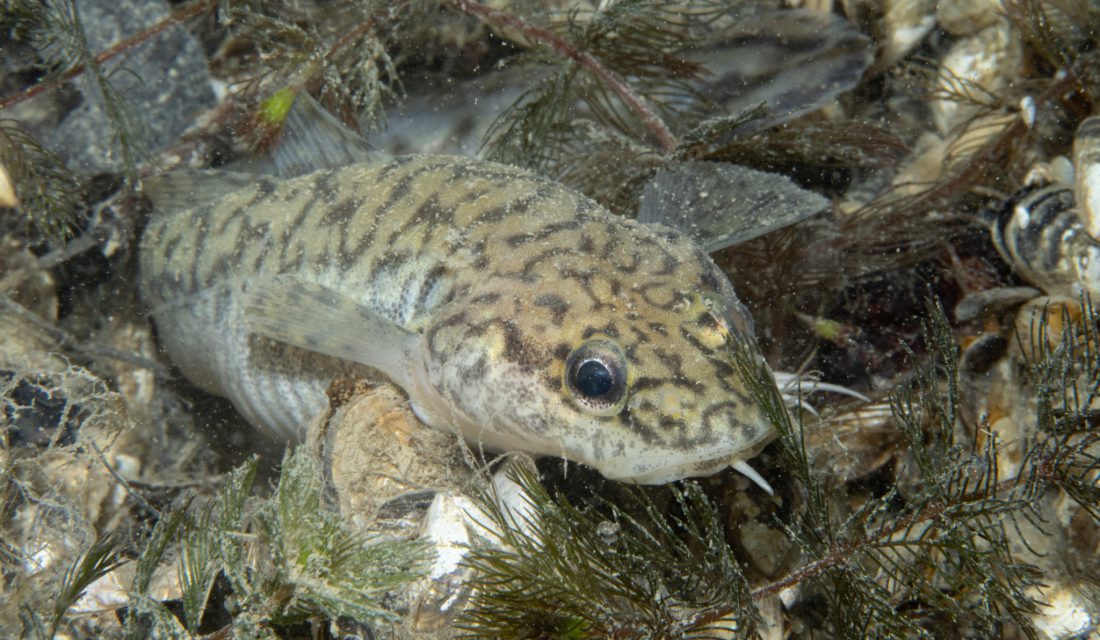
Burbot are an interesting fish. They are a cold-water fish and can be found in most of Canada. They are eel-like in appearance but are most easily identified by their chin barbel, sometimes referred to as their chin whisker, which helps them find food. They are active in winter but perhaps what’s most interesting about this fish is when they spawn. They spawn in winter under ice! While they are normally found in deep waters, when it comes time to spawn, they move to shallower areas. They congregate into what are called “spawning balls”. Eggs are released and fertilized in the water before they settle on the bottom.
Masterful Mammals
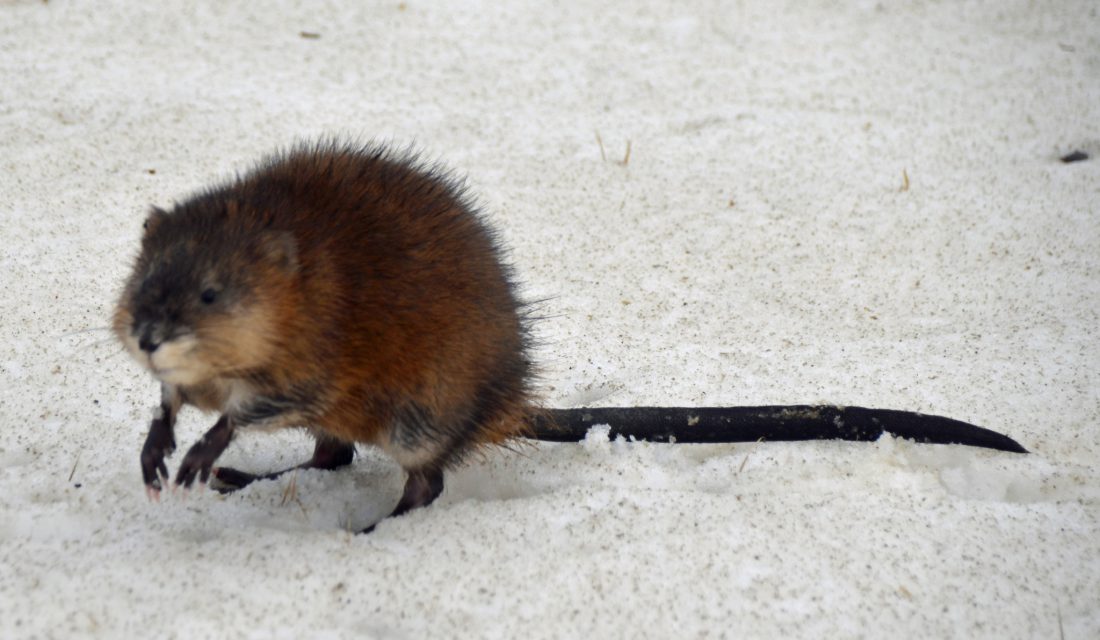
Even Muskrats are busy under ice. They create feeding shelters called push-ups. This is when they push aquatic plants up through holes or cracks in the ice, creating a small dome-like structure. They use push-ups as a place to rest when out foraging. You might have even noticed these small piles on top of the ice. They’ll chew away at the ice throughout the winter to keep the holes open!
It’s incredible how much life and activity continues beneath the surface of the water and under ice during winter. From tiny organisms to larger animals, countless species remain active, adapting to the cold and thriving in this hidden world. Exploring this underwater world in winter isn’t easy, and there’s still so much more to learn about what happens beneath the ice.

Terri-Lee Reid
Terri-Lee Reid is a Freshwater Conservation Researcher at the Canadian Wildlife Federation (CWF). She leads initiatives in researching, designing and delivering freshwater programs and advocating CWF’s freshwater positions to government, the public and other stakeholders.


1 comment
Loved learning the underwater life stories!! I learned about the Muskrats pushups and realize that may be what I am seeing on our lake as there is a Beaver Family living in the area!! I’ve been wondering where they have been with all this cold. THANKYOU THANKYOU!!!