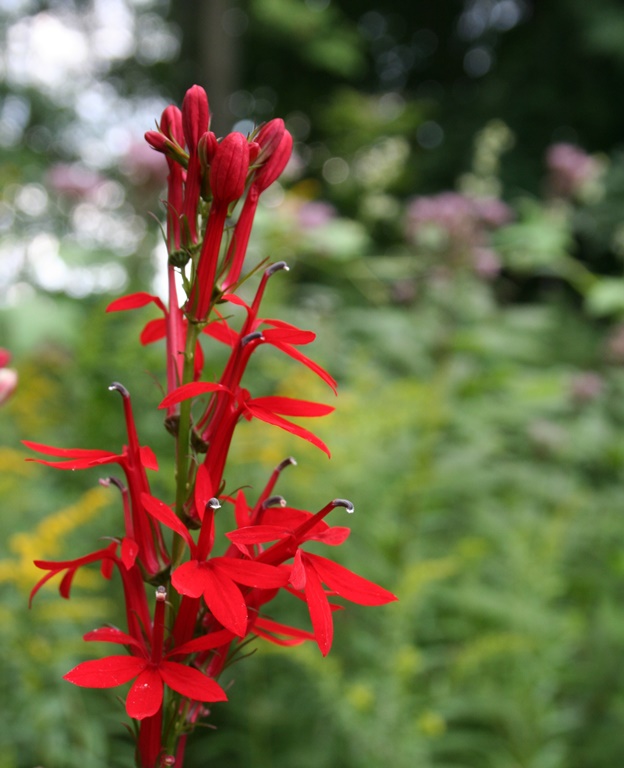
Frequent users of the iNaturalist app and its online platform understand the potential for discovery inherent in its use.
A recent example of this happened in the Brantford, Ontario area, where a few photos uploaded through the app turned out to be the rediscovery of the Illinois Tick-trefoil, a plant not seen in Canada since the 1970’s.
The significance of this finding spurred a species reassessment by the Committee on the Status of Endangered Wildlife in Canada (COSWEIC), an independent committee tasked to assess and classify Canada’s wildlife species at risk of extinction. The committed deemed the plant to no longer be Extirpated from Canada, but still Endangered due to the limited amount of native prairie habitat remaining in Ontario
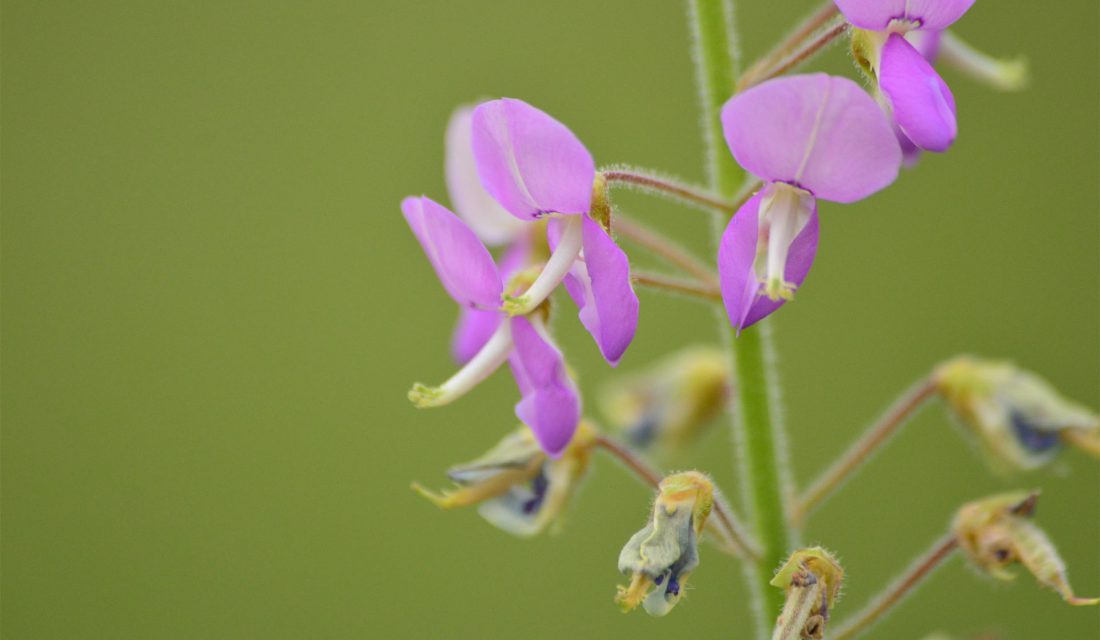
The species was one of 39 assessments recently carried out by COSEWIC as it undertakes the critical first step in endangered species conservation. The flowering plant in the pea family is common in the United States but had not been reported in Canada since 1978. A 2018 photo uploaded to iNaturalist Canada sparked debate amongst experts, the consensus being that this was in fact the species that was last seen 40 years ago. There are now 30 observations from the Brantford, Ont. area which contributed to the recent reassessment by COSEWIC.
Those occurrences and 400,000 observations of nearly 600 other species at risk in Canada can be viewed and used for conservation at the Species at Risk in Canada iNaturalist project. The plant’s previous Canadian range remains a mystery as the historic observations were made before GPS, which also highlights the important role of technology in conservation. The herbaceous perennial grows up to 10 centimetres tall with hairy stems and purple flowers that burst when touched, releasing pollen. The key in reporting these is to get closeup and in-focus photos of the flowers, leaves and stem, allowing it to be differentiated from more common trefoils.
Everyday Folks Making Extraordinary Discoveries
The exciting discovery reinforces the value and potential for everyday people using iNaturalist. From rare moths to elusive marine species, the iNaturalist app is transforming how we track biodiversity across Canada. By turning everyday nature sightings into valuable scientific data, this community-powered platform helps uncover species that might otherwise go unnoticed—strengthening conservation efforts and deepening our connection to the natural world. Every photo, every observation, brings us closer to understanding Canada’s rich and fragile ecosystems.
Since the launch of iNaturalist.ca (the Canadian version of the internationally used iNaturalist.org platform), more than 21 million wildlife observations have been registered from coast to coast to coast. Despite the rapidly growing number of users and observations uploaded through iNaturalist.ca, there are approximately 500 plants from historic records that are missing from the iNaturalist Canada database, as well as 3,500 missing fungi and 900 missing vertebrates, 300 missing molluscs and 700 missing arachnids. The biggest gap remains in insect populations, where we are missing 10,000 species. Scientists continue to seek public help to find these missing species by sharing wildlife photos or sound recordings using the free iNaturalist app or iNaturalist.ca. On the flip side, there are numerous times where the iNaturalist Canada community has found the only occurrence of a species anywhere in the world – we have nearly 900 of these species.
One of the most significant features of iNaturalist.ca is that anyone in Canada can use it at any time, uploading species observations and sound recordings into the database and contributing to wildlife conservation in Canada. Two major opportunities to join the iNaturalist.ca community in tracking wildlife observations are again scheduled in 2026. These include the annual City Nature Challenge (April 24 to May 10, 2026), and the Canadian Wildlife Federation Great Canadian Bioblitz (September 19 to 27, 2026).
Who knows – your observation could be a rare discovery that demonstrates the value and impact of participating in citizen science by using iNaturalist!!
Learn more about the Canadian Wildlife Federation’s work with iNaturalist.ca

James Pagé
James Pagé is CWF’s species at risk and biodiversity specialist. He leads CWF’s initiatives on species at risk conservation as well as CWF’s involvement with provincial and federal governments with respect to endangered species protection.