What can we learn from 20,000 observations of amphibians and reptiles on roads in Canada?
Plenty!
The first thing is that many amphibians and reptiles cross roads and perish on those roads every year.
How did we collect 20,000 observations of amphibians and reptiles on roads? A few years ago, I created a project on iNaturalist called Canadian Amphibian and Reptiles on Roads. And observations from people across Canada have poured in of amphibians and reptiles – alive or dead – on roads. A big thank you to almost 3,000 people who contributed observations!
Recently, Reta Meng, a PhD candidate at McMaster University, and I analyzed these data. We found that reptiles greatly outnumbered amphibians, with just over 80 per cent of the observations being reptiles on roads. Such a strong bias towards reptiles was surprising and could be because a turtle or snake on a road is easier to spot than a small frog or salamander.
Why Do They Cross the Road?
The results are clear that many species of amphibians and reptiles cross roads for many reasons such as to get to breeding ponds, foraging areas or hibernation sites. There were observations of 68 different species of amphibians and reptiles:
- 23 species of snakes
- 20 species of frogs and toads
- 13 species of salamanders
- 8 species of turtles
- 4 species of lizards
While a large number of species were found on roads, the top 10 species accounted for three-quarters of all the observations.
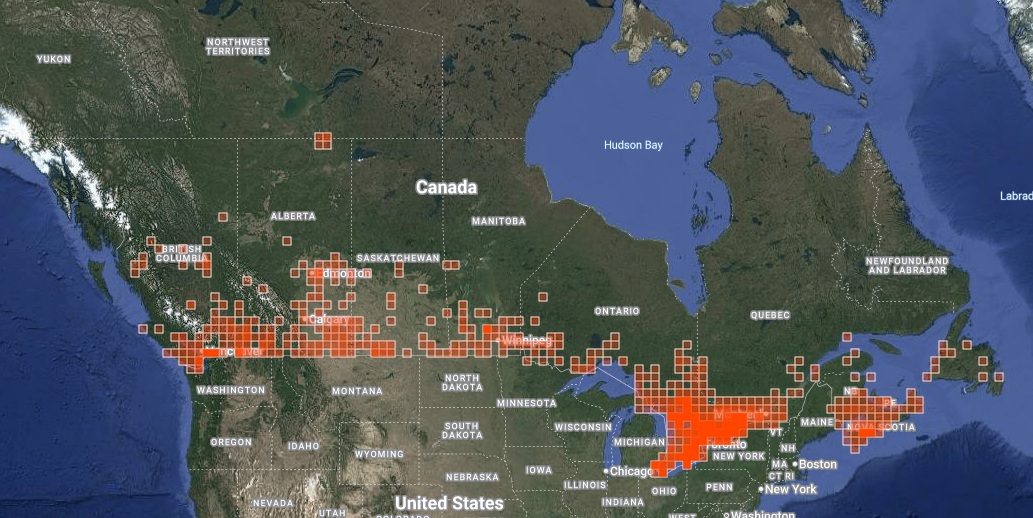
We also found that the observations were strongly biased towards Ontario. Although Ontario represents less than 40 per cent of the Canadian population, 80 per cent of observation were made in the province. Clearly, iNaturalist is popular with people in Ontario. Despite these biases, there are observations from every province as well as the Northwest Territories, which had a few observations of Common Garter snakes on roads in the extreme south of NWT.
The Top Hitters
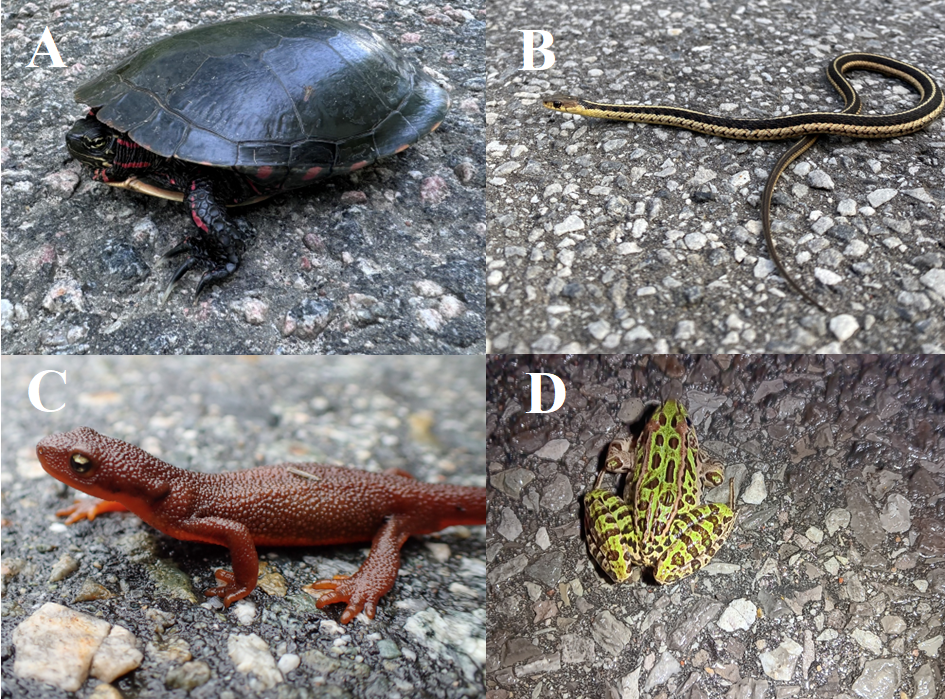
The most commonly reported species on roads was the Painted Turtle, making up almost one in four observations. It is not surprising that the Painted Turtle would be the top species found on roads, as it is the most widespread turtle in Canada, ranging from British Columbia to Nova Scotia.
Here were the top five species on roads:
- Painted Turtle
- Snapping Turtle
- Common Garter Snake
- Blanding’s Turtle
- Northern Leopard Frog (the only amphibian in the top five)
Both the Garter Snake and the Leopard Frog are abundant and widespread so it is not surprising they would be among the species mostly commonly found on roads.
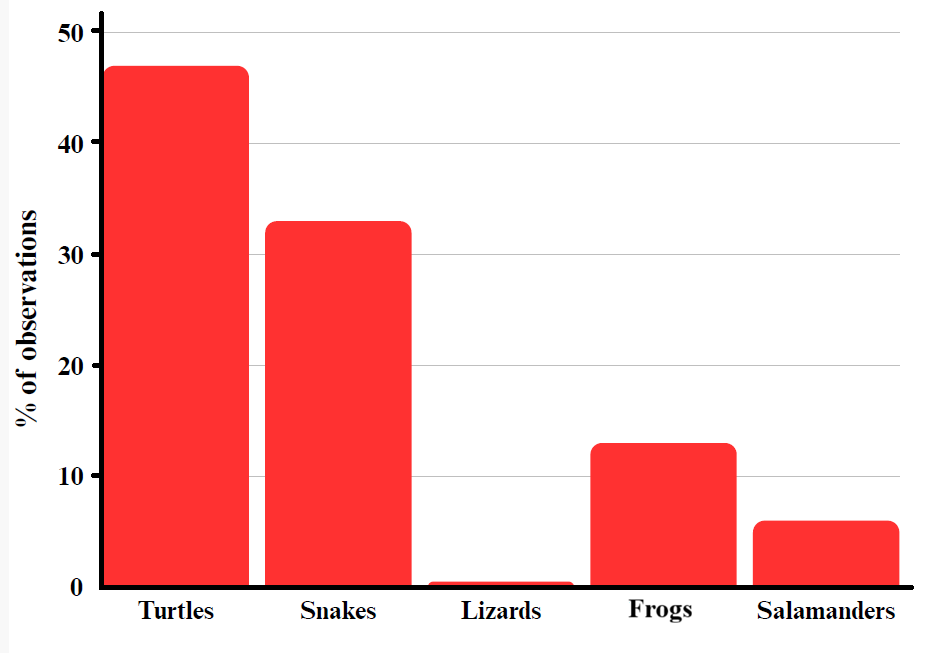
Overall, turtles as a group made up more than 40 per cent of the observations, demonstrating just how much a risk roads pose to turtles. In contrast, lizards made up less than one per cent of the observations. This result is likely not because lizards wisely avoid roads, but because lizards are rare or absent in most parts of Canada and these small reptiles are likely harder to see on roads compared with snakes and turtles.
Provincial Breakdown
Looking at the data by province, most provinces had a snake or turtle as the top species observed on roads. One surprising exception was British Columbia. This province had the second most observations of amphibians and reptiles on roads. In BC, the top species was the Rough-skinned Newt — a salamander — which made up almost a quarter of the observations from that province.
Despite being the top species in Canada, the Painted Turtle was the most commonly reported species only in Ontario, although it was in the top three species in Quebec, New Brunswick and Nova Scotia.
Tracking Wildlife Road Fatalities
The number of observations has been growing each year as more people start using iNaturalist. In 2024, there were more than 4,700 observations of amphibians and reptiles on roads in Canada. Considering that fewer people are using iNaturalist in provinces outside of Ontario, and that the data are biased against small frogs and salamanders, the true number of amphibians and reptiles found on roads each year could easily be double that number. That is a lot of potential roadkill.
If you would like to find out more about our results, you can read the complete scientific paper >
It is never too late to join iNaturalist.ca and contribute your own observations of amphibians and reptiles on the roads — or off.
Learn more about our work with freshwater turtles.

David Seburn
David Seburn is the Freshwater Turtle Specialist with the Canadian Wildlife Federation. David has worked on amphibian and reptile conservation for more than 25 years. He has radio-tracked turtles through swamps and spoken to hundreds of people about turtle conservation. In 2020, he was presented with the Blue Racer Award from the Canadian Herpetological Society for significant contribution to the conservation of Canadian amphibians and reptiles.