
While Dark-eyed Juncos (Junco hyemalis) aren’t a species at-risk, they can always use a helping hand! They are one of North America’s most abundant forest birds, often found in forest understories but will also visit bird feeders. They have a broad breeding range in Canada although they tend to stick to southern Canada as part of their winter range.
To help these little sparrows, let’s first look at their habitat. For breeding, they are commonly found in coniferous forests with species of pine, fir and spruce but will also use deciduous forests composed of hickory, oak, maple and aspen. In winter, they form flocks and can be found in fields, parks, along roadsides and in gardens.
Also important to discuss is their diet. Throughout the year, 75 per cent of their diet is made up of seeds. Some of their preferred seeds come from plants, many of which we may find undesirable, such as crabgrass, lamb’s quarters, buckwheat and chickweed. Insects including ants, moths, caterpillars, beetles and wasps are an important part of their diet during the breeding season. Berries are also eaten, although less frequently. They prefer to look for food on the ground. You may even see them scratching an area of snow to find seeds below.
To help the Dark-eyed Juncos in your area:
Provide them with a food source
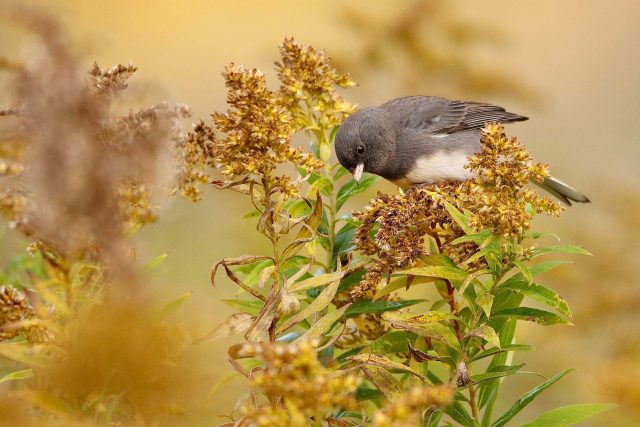
- Grow native plants and leave the stalks and seeds for the winter. Native grasses like Little Bluestem, flowering plants such as goldenrods and berry producing trees and shrubs are great options.
- Leave the leaf litter. Doing so will maintain habitat for insects where they lay eggs and overwinter – beneficial components of a junco’s diet.
- You can supplement their natural diet with bird feeders. While they will happily take seed from the ground, they will also use open feeders that have a wide area to land on. Preferred handouts include cracked corn, millet and hulled sunflower seeds. Remember to clean your bird feeders regularly.
Provide them with habitat
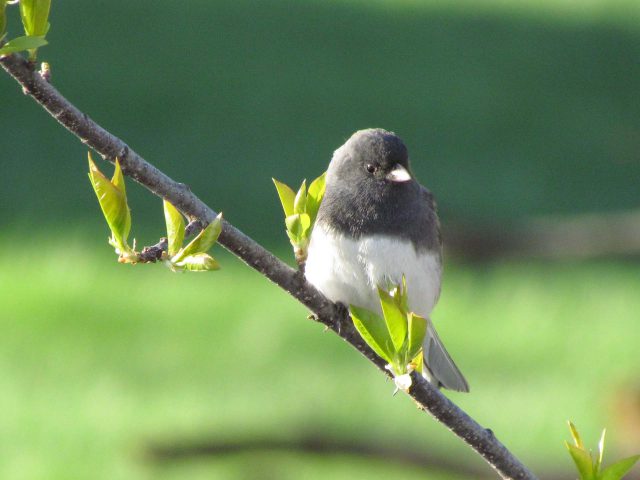
- Provide a variety of native plants to offer shelter. Include grasses, perennials, shrubs and trees to provide different levels of vegetation.
- Make a brush pile by placing branches or logs along the bottom and use more branches to raise the pile. This will provide juncos with a great place to seek shelter.
Help keep them safe
- Skip the pesticides. Juncos depend on seeds and insects as food sources. Visit our website on Gardening for Wildlife for some pesticide alternatives.
- Reduce the chances of juncos flying into your windows. See some simple ways to make your windows safer.
By helping Dark-eyed Juncos you’ll also be helping many other species- and not just birds! The native plants, brush piles and wildlife-friendly gardening practices will be sure to help insects, amphibians, small mammals and more!

Terri-Lee Reid
Terri-Lee Reid is a Freshwater Conservation Researcher at the Canadian Wildlife Federation (CWF). She leads initiatives in researching, designing and delivering freshwater programs and advocating CWF’s freshwater positions to government, the public and other stakeholders.


2 comments
I love receiving your information on birds. I have just finished cleaning off my patio for my morning serge of birds. I am 92 and still feeding birds. I passed this on to my 4 adult children which was passed on to me from my mother. I have a wonderful place here at a senior centre, ground floor with lots of trees etc. My son brought me a bunch of branches to put around too. Nature is a wonderful pastime. Thank you for all you are doing. Nora
good morning Terri-Lee from Richmond BC, the wet coast of CA! Thank you for all of this info about juncos. I am happy to be a back-14 where a large flock spends the winter. They vacate my yard mid April and return mid Sept. I have many native bushes, plants, and flowers that bloom from Jan to Dec…not the same blooms. Some of the variety are CWF starters from Home Depot including milkweed and butterfly bushes. Ohmy, they can be taking over a bed in no time so I have to be vigilant!
Happy Friday Dec 19th by the way and at this moment, 0940, I have house finches, four or five chickadees, a pair of Anna’s hummingbirds, flickers, nuthatches, song sparrows AND innumerable juncos flitting about ;} Lucky me!! A little flock of bushtits sweeps through semi-regularly, not daily. The male and female skimmia bushes are loaded with berries, the sarcococca are loaded with buds. The black-eyed susans are in a heap by the North fence, having had ALL of the seeds picked off. The zinnia seedheads are empty but the feverfew and the geraniums are still blooming…lucky lucky me!!