A beloved Canadian tradition in the summer months is to go strawberry picking with family or friends.
To be out amongst rows of strawberry plants, eagerly peeking through their leaves to find the tasty treasures within is always fun. (It’s even more fun to munch on a couple while filling your basket!) If you’ve ever considered growing them at home but felt a bit daunted by the space or effort needed, you might want to consider having a patch of wild strawberries instead. While their berries are smaller, they are generally sweet, flavourful and a great way to get kids outside, eager to explore and discover what’s new in the yard. In a good year, one can harvest many handfuls of strawberries from just a tiny patch of about 61 by 61 cm.
A Rose by Any Other Name
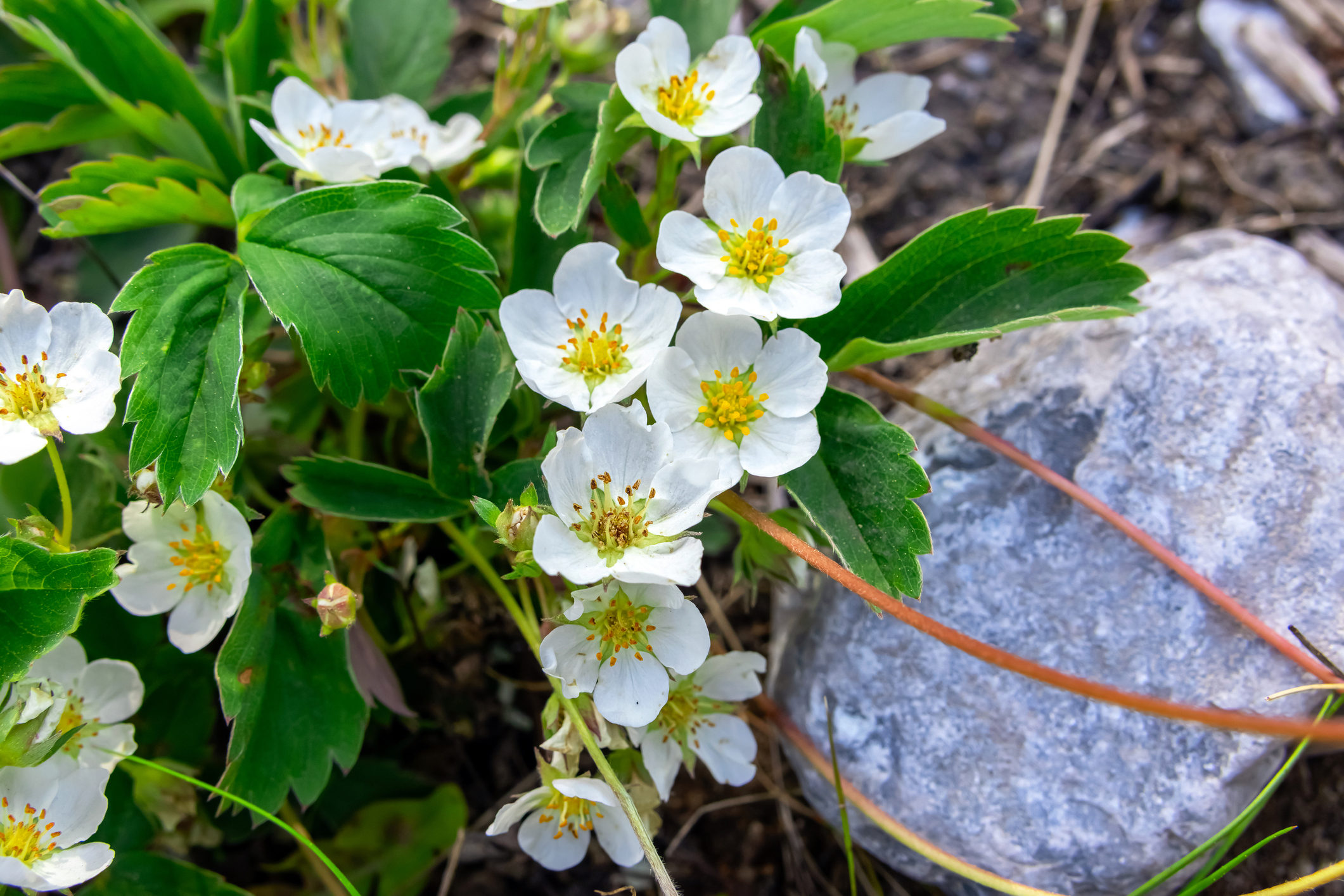
Canada has three species of native strawberries, all of which have white flowers that bloom typically between April to June. They are part of the rose family and have five white petals arranged radially around the centre which has many stamens, the part of the flower that bears pollen. Once pollinated, they form red fleshy fruit-like structures (commonly referred to as the fruit or berry) which have many small achenes – commonly but incorrectly referred to as the seeds. These structures are technically the fruit and contain the seed within! Wild strawberry plants are low to the ground, growing up to 15 to 25 cm high. They have trifoliate leaves, meaning they are divided into three leaflets, in this case, with toothed edges. Wild strawberries spread by sending out runners which grow along the ground and plant roots a distance away from the parent plant, anywhere from 15 to 50 cm.
Watch out for the non-native look alike, Indian Strawberry (its name reflecting its origin from India and other Asian countries) Potentilla indica, once called Duchesnea indica. Its other common names are Mock Strawberry and False Strawberry for good reason – it, too, is a low growing plant with trifoliate leaves that have wavy or toothed edges and its fruiting bodies look just like an oversized wild strawberry. You can tell the difference by its flowers which are yellow and the larger rounder ‘berry’ which forms atop a stem pointing upwards, unlike wild strawberry fruit which typically hang down. The fruit are also edible but don’t have the same sweet flavour as a wild strawberry.
As to wild strawberries’ scientific name, Fragaria, it comes from the Latin word ‘fragra’ which comes from the more common word ‘fragrans’, describing a plant with fragrance. In this case, the strawberry fruit have a distinct and pleasant smell, especially if you crush them. ‘Strawberries’ refers to the fruit which form near to the ground. Many northern European countries call them ‘earth berries’ and people traditionally place straw around plants to lift the fruit up from the earth, keeping them cleaner and drier.
Benefits
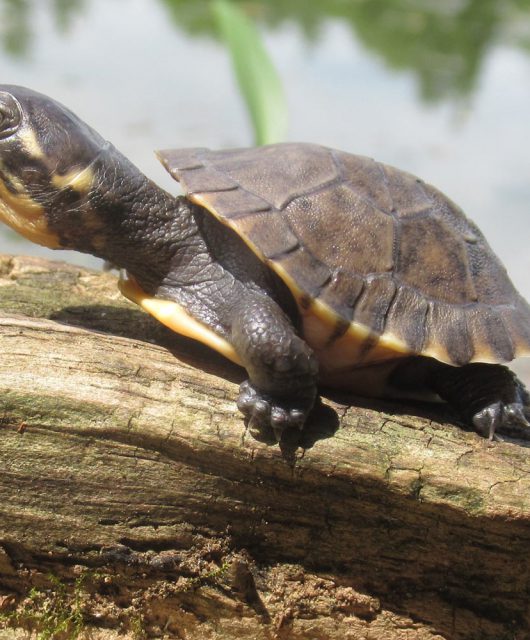
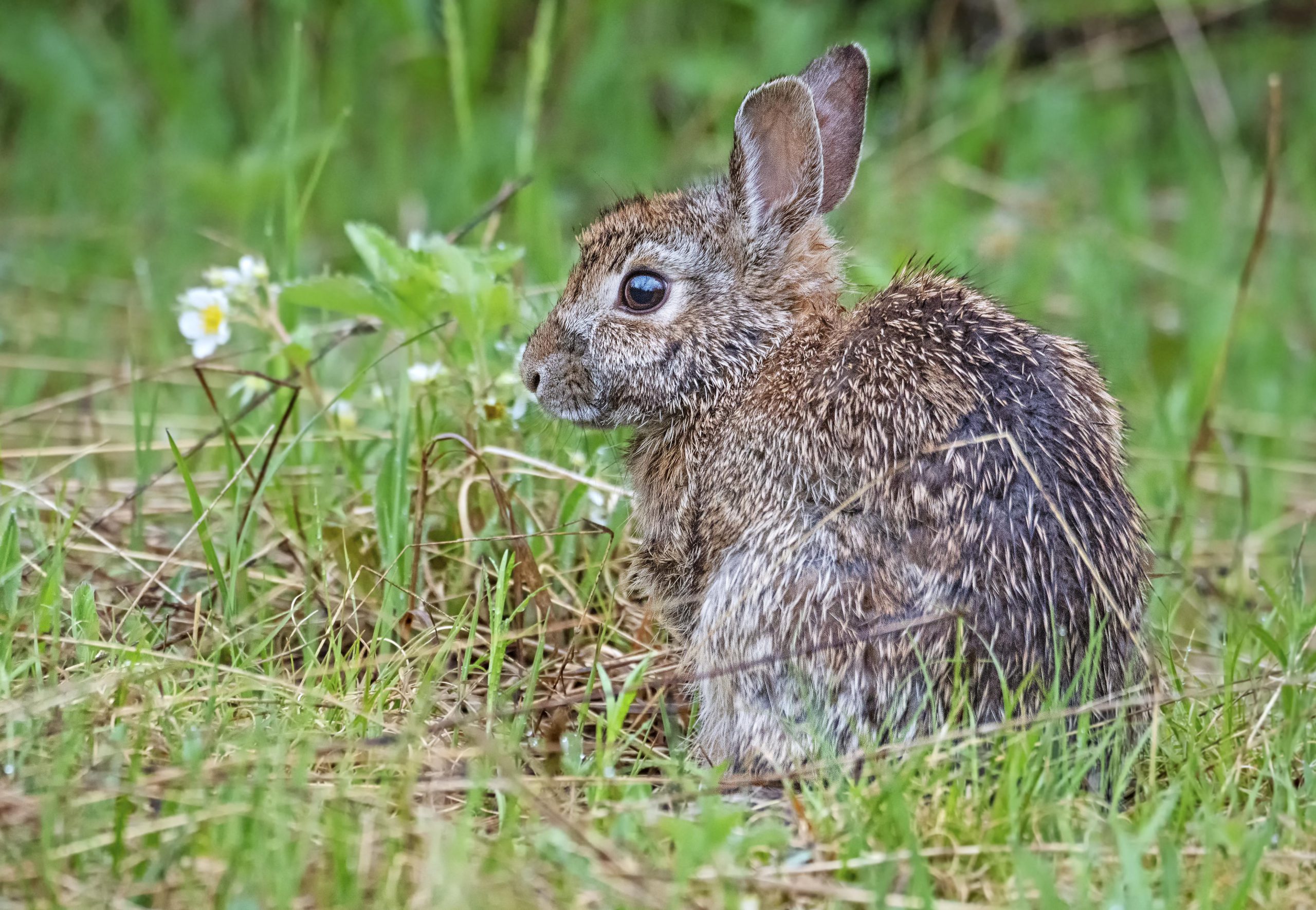
Strawberry flowers provide nectar and pollen for many species of bees, flies and butterflies. Their ‘berries’ are eaten by birds and mammals, from chipmunks to bears and their leaves are a larval food plant for some butterfly species.
All parts of wild strawberry plants are edible and the plant as a whole is nutritious, providing minerals and vitamins A, B, C and E. Wild strawberries are also medicinal, acting as a tonic and providing support to organs like the liver and kidneys. They have been used to help with ailments such as gout and arthritis as well as to treat ulcers, wounds and sunburns. For some, these tiny but mighty plants are famous for treating digestive upsets. In fact, the roots and leaves were used in the original formula of “Dr. Fowler’s Extract of Wild Strawberry” that was sold in stores from 1901 to the mid-80’s.
Check out the plants below to see what species are native to your neck of the woods, especially if you fancy growing them at home as a ground cover, in the lawn or along pathways (for easy snacking!)
Coastal Strawberry / Beach Strawberry / Sand Strawberry (Fragaria chiloensis)
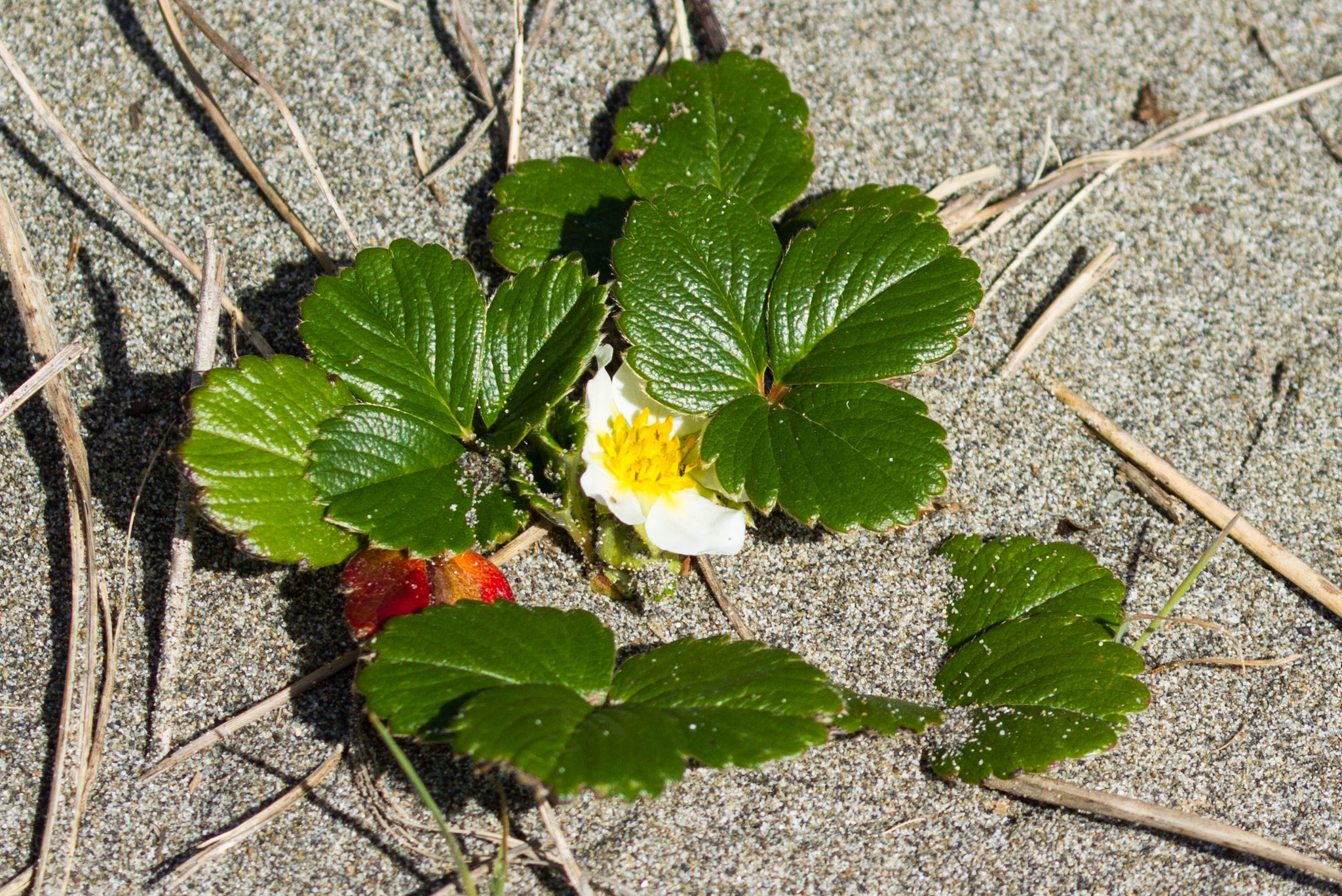
This species (subspecies Lucida and Pacifica) is found along the coast of BC, in meadows, sand dunes and coastal bluffs. They grow in full sun to partial shade and are somewhat drought tolerant given their affinity with sandy soils. Their leaves are typically shiny and dark green and they are considered to be slower spreaders than other Canadian species. This is not to be confused with another subspecies of this plant which grows in South America (hence its scientific name ‘F. chiloensis ssp. chiloensis’ and its common name Chilean Strawberry) which is one of the parent plants of the cultivated strawberry.
Woodland Strawberry (Fragaria vesca)
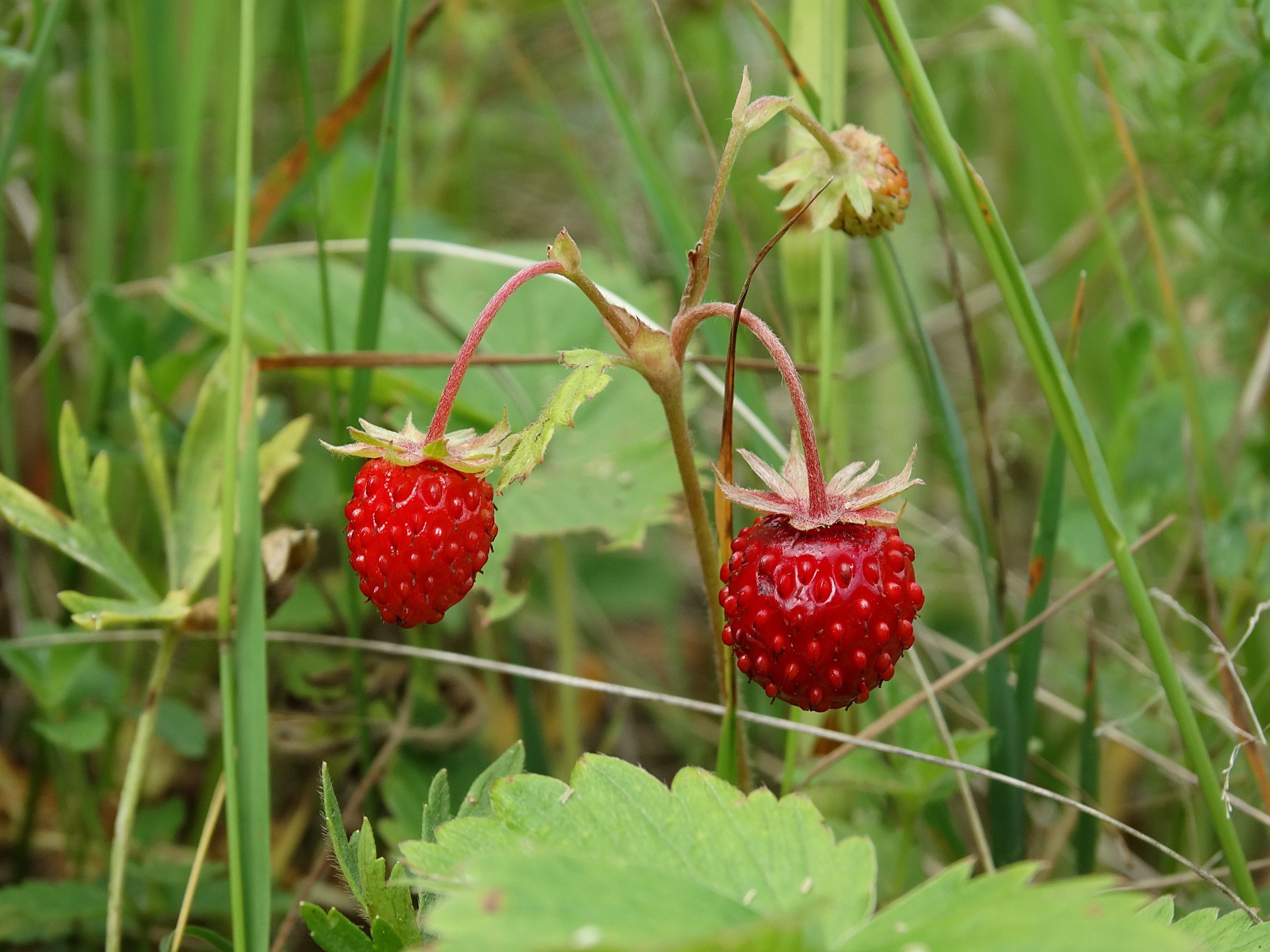
As its common name implies, this strawberry species grows in woods, thickets, forest edges and meadows, especially where there is partial shade. It is widespread, reaching most of southern Canada from BC to NL and up into the Northwest Territories. A subspecies, Fragaria vesca subsp. Bracteata (Pacific / Western Woodland Strawberry) is found in BC and AB. The fruit is typically elongated and the achenes stick out a bit like little bumps
Virginia Strawberry / Wild Strawberry (Fragaria virginiana)
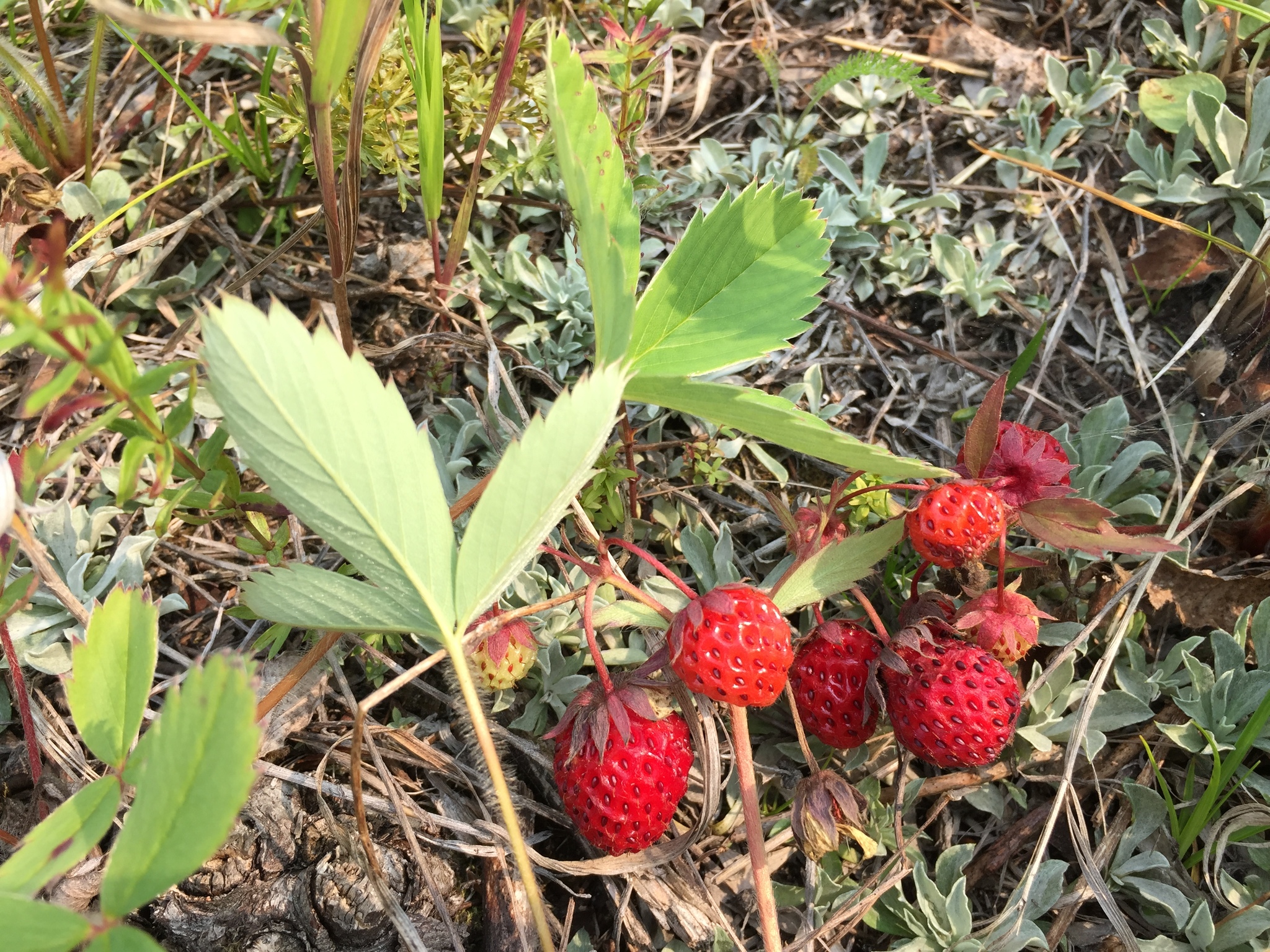
There are a few subspecies of this plant and collectively they are native to all provinces and territories. You might spot one in disturbed areas like roadsides as well as meadows, fields and open areas of woodland. They do well in full sun as well as partial shade. Virginia Strawberry is the other parent plant of the cultivated strawberry. The fruit is typically more rounded than the Woodland Strawberry and its light-coloured achenes are sunken or indented on the berry.

Sarah Coulber
Sarah is an Education Specialist at the Canadian Wildlife Federation. She writes about the benefits and ‘how-to’s’ of wildlife-friendly gardening, coordinates content for the Gardening for Wildlife web section, co-manages the wildlife-friendly demonstration gardens at CWF headquarters and assists Canadians looking to achieve similar results with their own properties.