Welcome to a new year of exploration with the Canadian Wildlife Federation’s WILD Spaces Program!
We’re so pleased to have you join us on a journey that empowers students from Grades 3–6 to build meaningful connections with the natural world right outside their door.
How do you know if your space is a WILD Space?
Spoiler Alert!
- Every space is a WILD Space
- Wildlife if everywhere
- WE are PART of nature
- We share spaces with many different plants and animals. What can you find in your WILD Space?
Step 1: Connect With Your Outdoor Space

Encourage students to explore their surroundings and ask:
- Is my space a WILD Space?
- What do I notice? What’s missing?
- Can I find nature here? Where?
- Who or what shares this space with me?
Step 2: Learn About Your WILD Space
Dive deeper into local wildlife and habitats:
- Check out our WILD Webinar “Gardening for wildlife” or short video on gardening for wildlife.
- Find lesson plans, activities, and more in the Learning Library. The lesson plans on Plant Anatomy and Life Cycle & Pollination are two great places to start.
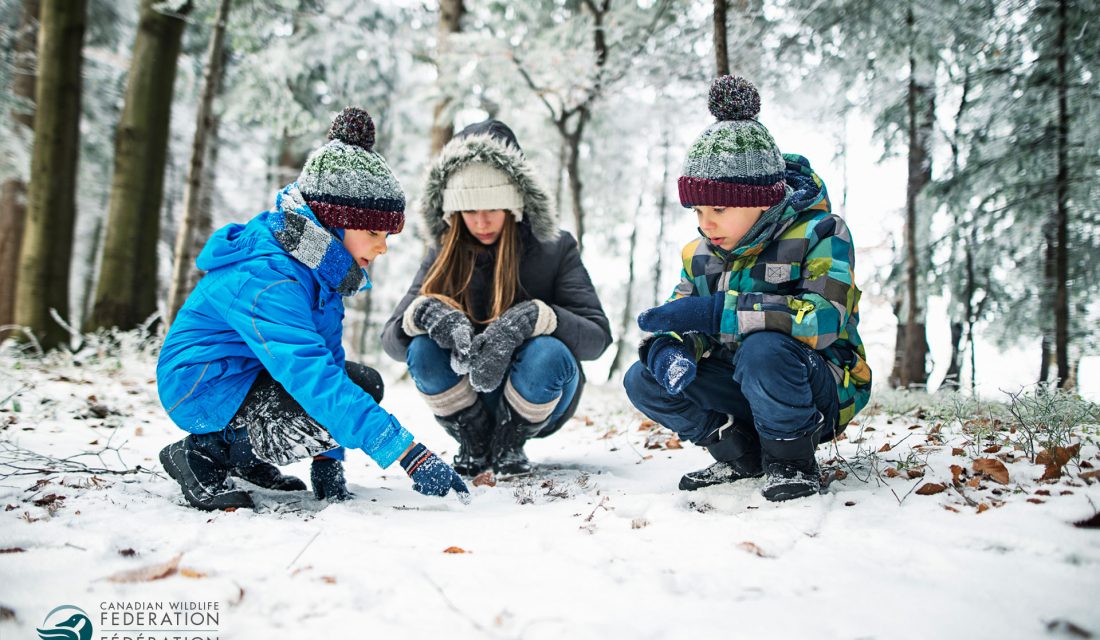
- Take photos of animal tracks in the snow and upload them to iNaturalist, or look them up using the Seek app.
- Discover species in your area using Hinterland Who’s Who (HWW), or through one of our partner organizations.
- Sign up for the WILD Ed Newsletter and you’ll find out January’s topic is all about how wildlife adapts in winter.
Let’s make 2026 a year of discovery, stewardship, and connection.
Looking for some professional development? Check out our WILD Education experiential education workshops.
Stay tuned for more resources, plant giveaways, and student action projects throughout the year!

Meagan Potter
Meagan is the program administrator for formal education at the Canadian Wildlife Federation. She has worked with WILD Spaces, WILD Generations, WILD Education, and the Gardening for Wildlife programs. When she's not at CWF, you'll find her working part-time at an emergency veterinary clinic or offering dog training lessons through her small business.