Our monarch butterfly tagging project has sparked lots of curiosity, and we’re excited to answer your questions!
This summer, the Canadian Wildlife Federation (CWF), in collaboration with Environment and Climate Change Canada and the Norris Lab from University of Guelph, tagged migrating Monarch Butterflies using new Bluetooth tracking technology (BluMorpho) tags from Cellular Tracking Technologies. As the butterflies begin their incredible journey south to Mexico, the tags will help us learn more about Monarch Butterfly migration and help us make decisions to best conserve this incredible species. Curious about how the tags work, how they’re attached, or what researchers hope to learn?
Read on for answers to some of the most frequently asked questions about our monarch tagging project!
About the Tags
How Do the Tags Work?
The BluMorpho tags use a 2.4GHz frequency range, making the antenna very small and very efficient. The tags are detected using Bluetooth technology on smart phones, Motus stations, and other networks which record the time and location where the detection occurred. The tags are 100% solar-powered. No battery means that the tag is lighter than if it needed a battery, and the tag can transmit indefinitely as long as it is visible to the sun.
How Much Do the Tags Weigh?
The BluMorpho tag that we used is the lightest-weight radio tracking tag weighing 60mg, or 0.06g—less than a grain of rice!
Where Can I Buy Them?
The tags were created for use by scientists to help increase our understanding about Monarch migration and habitat needs, ultimately to help its recovery. We’re using data collected from the tags to help further scientific research for this declining species. Since monarchs are very delicate, only trained professionals with the proper handling permits should participate in tagging.
What is the Difference Between These Tags and the Monarch Watch Sticker Tags?
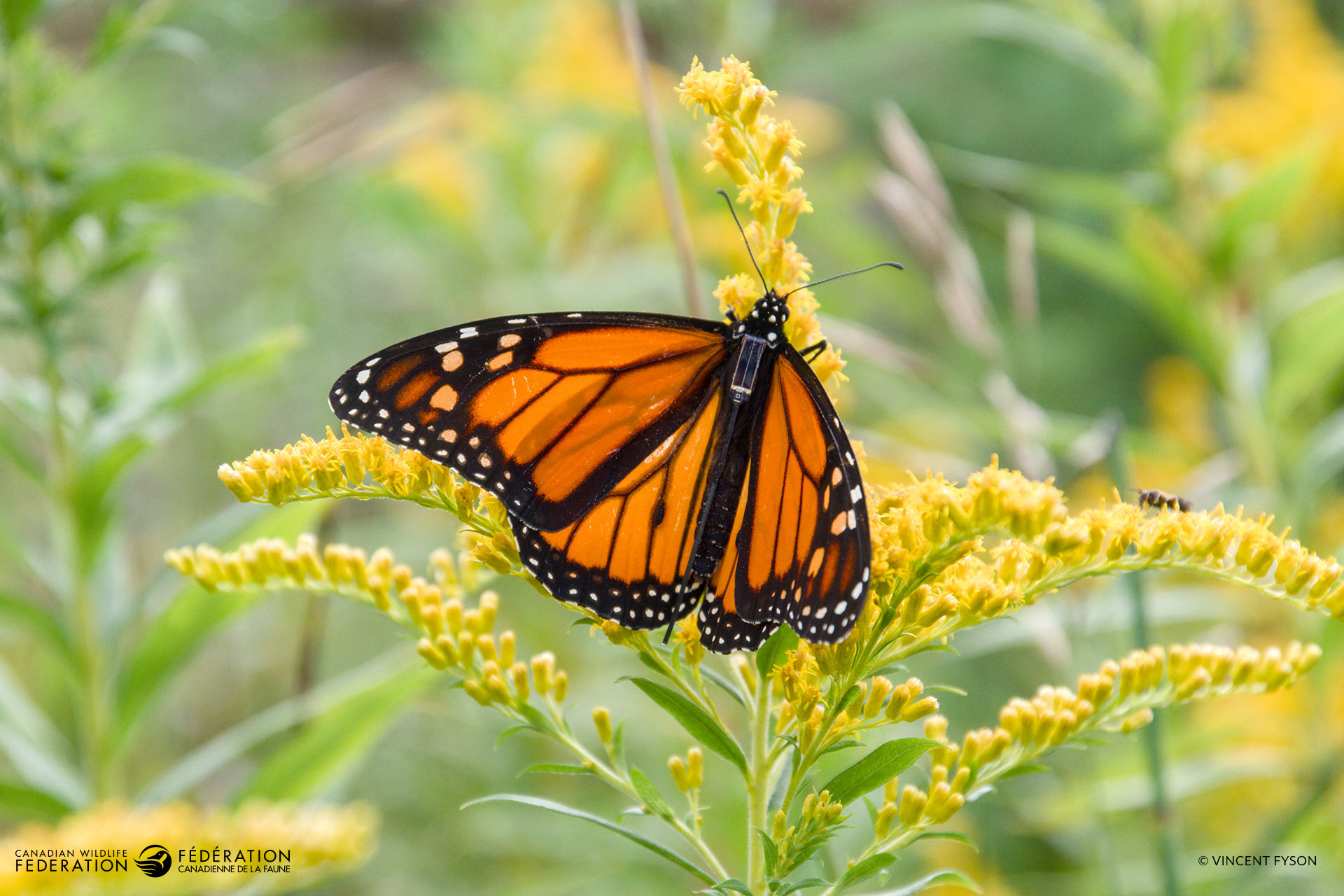
Sticker tags contain no electronics and instead rely on being found and reported back to Monarch Watch. These tags transmit continuously and provide data remotely as long as they are in range of a receiver (radio tower, cell phone, etc.). These tags are slightly larger to account for the technology, but instead of attaching to the monarch wing, the tag is attached to the back of the thorax.
About the Monarch Butterfly

How Does the Tag Get Attached to the Monarch? Is it Traumatizing to the Monarch?
We used a non-toxic, flexible adhesive to secure the tag to the back of the butterfly. Part of the tagging protocol includes chilling the monarch for a few minutes so that they naturally calm down (the same process that occurs during cold evenings/nights when the monarchs naturally become less mobile) which helps avoid any injury or struggle. Once the tag is secured, the monarch is given time to warm up in the sun before being released.
Can They Even Carry the Tag all the Way to Mexico? Isn’t This an Unneeded, Inconvenient Weight?
The BluMorpho tags are 0.06g (or 60mg, less than the weight of a grain of rice!). The butterflies are weighed before tagging (along with the tags to ensure the weight is within the acceptable range) to ensure that they are strong enough to carry the tag, but not too heavy. Monarchs who are too heavy or too light to be tagged are released to continue their migration.
How Does the Tag Impact Their Flight or Behaviour?
This tag, along with others, were tested for impacts on the ability of the butterfly to make the flight to Mexico and did not find evidence that the tag would impact flight or behaviour in a significant way. The study is currently under review and once it has been published, we will share the link.
What Happened to the Monarch if the Tag Stops Transmitting a Signal?
A number of things could have happened to the monarch if the tag is no longer being detected. The tag may have fallen off and landed upside down. It could be covered by a shadow or debris, or the monarch is roosting with their wings closed, so the sun is not reaching the solar panel. It could also mean that the monarch has been predated or simply outside the range of cellphones and so is not being detected.
How do the monarchs know where to go?
That is a great question and one that humans have tried to answer for decades. Since they are multiple generations away from their ancestors who flew to Mexico the previous fall, migrating monarchs must have some natural instincts that help them find overwintering sites. The scientific consensus (and most studied hypothesis) is that they use celestial cues (from the sun) in combination with the earth’s magnetic field. Read more about the science behind monarch migration >
If we already know where they are headed, why are we interfering by tagging them?
The tags can help us answer many questions that we don’t already know about monarch butterflies, and the answers to these questions can help us make decisions to better conserve this endangered species. Some of these questions include:
- Specific migration pathways that monarchs originating from different areas take. For example, Point Pelee was thought to be the main flyway out of Ontario, but monarchs tagged in Prince Edward County crossed directly over Lake Ontario into New York, bypassing Point Pelee altogether.
- How long does the journey take and how fast they fly. For example, monarchs tagged by ECCC in Manitoba were detected more than 320 kilometers south 4 hours after release. This means the monarchs were travelling at an average speed of 80kms/hour! This is a speed that has never been previously recorded in monarchs and wouldn’t have been possible without the tags.
- The tags will help us measure how shifts in climate, weather patterns, and habitat availability alter migration patterns from year to year. These questions could not be answered at this scale with just sticker tags.
- How wind, temperature, and seasonal conditions affect the speed and trajectory of flight. There is a lot of evidence already from these tagged monarchs that they are following paths of wind to aid in their migration.
- Differences in behaviour/success of reared vs wild monarchs. There is a lot of discourse about the success and ethics of rearing monarch butterflies, and these tags will help determine if human reared monarchs are making it to the overwintering zone at the same rate, or if rearing is negatively impacting migration success.
- How important small-scale meadows are in urban environments. The monarchs are often migrating through highly populated urban centres and these tags help us determine where they are stopping over, and where we can focus restoration efforts to best assist the species when they’re looking for nectar to refuel along the way.
It is important to remember that all of these questions will need to undergo rigorous scientific testing before accurate conclusions can be made. This includes multiple years of data from all over the monarch breeding range.
Learn more about our work with Monarch butterflies.

Katherine Peel
Katherine Peel is a terrestrial conservation project coordinator at the Canadian Wildlife Federation working in both the grasslands awareness and rights-of-way as pollinator habitat programs.