Phantoms, witches, werewolves… and the Eastern Red Bat – oh my!
You may be wondering what these Halloween regulars have in common? Well, they are all masters of disguise!
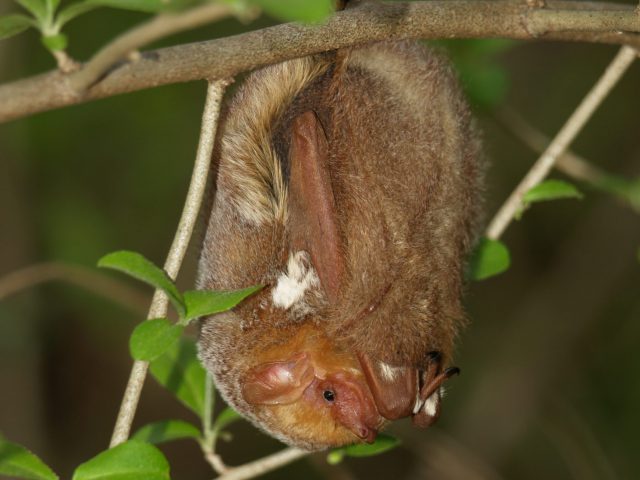
Although the Eastern Red Bat (Lasiurus borealis) cannot shapeshift like the other mythical species, it is a natural wonder. The mammal’s distinctive red-orange colouring makes it almost invisible amongst dead leaves and cones – especially when it hangs upside down from branches at the tops of trees, blowing slightly in the breeze.
The Eastern Red Bat can be found across Eastern Canada. It has been detected in Alberta and British Columbia, although only non-reproductive females and males have been found in these prairie provinces so far, likely because it’s at the edge of their known geographic range.
Eastern Red Bats are fast, high-flyers known to hunt moths and other insects in open landscapes above waterways and fields. Although they sometimes hunt in small groups, these introverted bats tend to spend their days alone in deciduous forests in trees and shrubs.
When the weather starts getting colder, these migrators in Canada, the Eastern Red Bat, Silver-haired Bat and Hoary Bat, head south for the winter. The Eastern Red Bat sometimes heads to the Central/Southern United States, but they have also been found as far as Mexico. During colder periods, these bats have been known to either crawl into leaf litter to stay warm, or they will wrap their furry-tailed membrane around themselves like a blanket.
Fun Fact
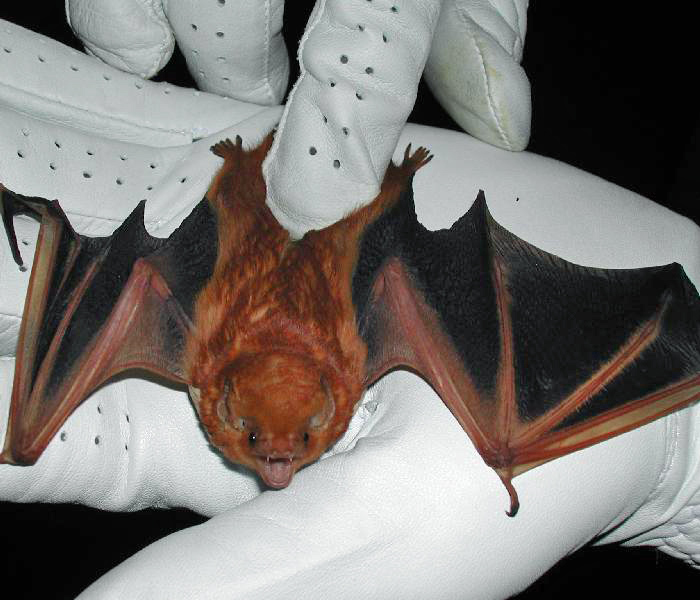
The Hoary Bat and Eastern Red Bat both have Lasiurus in their Latin name, which literally means hairy tail. They use these furry tails to keep warm and camouflage themselves in tree branches. Other species of cave-dwelling bats don’t have furry tails, as they don’t need this ability.
The Eastern Red Bat is a unique species in Canada, not only because of their striking colouring, but also because they are more likely to have twins and have been known to have one to four pups per year – a very large litter considering most bats only have one. This is possible because these bats tend to have four mammary glands compared to the two that most bats have. During the summer, mothers will roost in tree canopies with their young – every pup loves a tree house.
Unfortunately, the Eastern Red Bat, alongside its other migratory companions, has recently been assessed by COSEWIC as Endangered in Canada. This is due to a variety of factors such as habitat loss, pesticide use and the loss of insect populations, which also impacts other bats. However, the primary threat to these migratory species is wind turbines. Although it is difficult to assess the impact of these facilities on bat populations, it is estimated that turbines kill 600,000 to 900,000 bats per year in North America either due to direct collisions or turbine-related barotrauma from sudden drops in pressure around the blades.
There are many theories for why bats are drawn to turbines ranging from their resemblance to trees, concentrations of insects around the base of the towers, their proximity to migratory stop-over and hibernation sites, attempts to fly between blades at slower wind speeds, but there are no concrete answers.
Luckily, there are some promising strategies to decrease mortality such as shorter turbines, strategic placement to avoid known hibernation and migratory routes, stopping turbines from spinning during low wind speeds and during times of high bat activity such as the two hours after sunset. The best solutions are still being researched, but by implementing some or all of these changes it is possible to significantly reduce the risk to bats, while only minimally impacting energy production and profits.
If you don’t live in an area with turbines, there are still many things you can do to combat the other threats to our Eastern Red Bats such as:
- Planting native gardens with night-blooming varieties (like the Common Evening Primrose) to attract moths to your yard for the bats to eat
- Maintaining native trees on private land
- Keeping the surface of water bodies clear and clean for drinking – they will scoop up a drink in flight
- Turning off outdoor lights at night to encourage bats to hunt
- Encouraging your community to take the steps to become certified as Bat-friendly!
Just because they make themselves invisible, doesn’t mean that these fascinating bats don’t need our help.
This October, visit HelptheBats.ca to learn more about this unique species and take CWF’s pledge for bats to join a network of Canadians across the country committing to take on bat-friendly actions in their everyday lives!

Author: Emily Becker, CWF Bat Research Technician
Emily supports conservation work as well as the Bat-friendly Community Certification initiative helping to unite communities across Canada in the conservation of bats and the habitat we share.

CWF-FCF
Our mission is to conserve and inspire the conservation of Canada’s wildlife and habitats for the use and enjoyment of all.