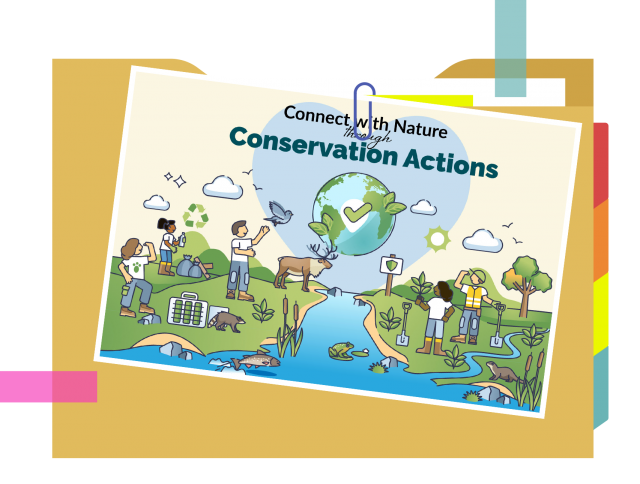
Connect with Nature through Conservation Actions
Welcome back to a new school year! This year, we’re focusing on connecting to nature through conservation actions — empowering students to explore, care for, and protect the world around them. Through meaningful actions, students will discover how their choices and actions can support wildlife, strengthen communities, and create lasting environmental change.
There are many types of actions students can take, each offering a unique way to connect with nature and make a difference.
Environmental actions focus on understanding and protecting ecosystems as a whole by exploring environmental issues, investigating human impacts, and taking steps to restore or maintain the health of natural systems.
Stewardship actions focus on caring for the environment through hands-on projects like habitat restoration and species monitoring.
Social actions involve raising awareness and advocating for change on environmental issues that affect communities.
Citizenship actions help students understand their role in decision-making and policy, from writing letters to participating in school councils.
Lifestyle actions encourage personal choices that reduce environmental impact, such as waste reduction or sustainable transportation.
What Inspires Students to Take Action?
Taking action doesn’t happen by chance — it grows from meaningful learning experiences that connect students emotionally, intellectually, and physically to the natural world. Earth Rangers believes there are 5 E’s to drive Eco Action.
Empathy
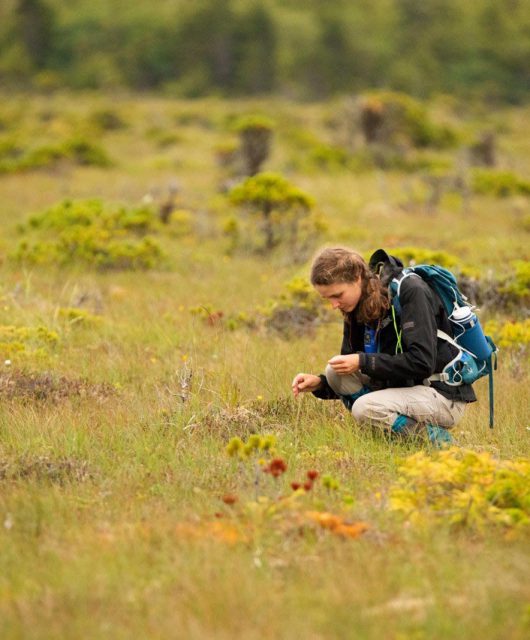
Empathy is the emotional foundation of conservation. When students feel connected to wildlife and natural spaces, they begin to care more deeply about protecting them. Time spent outdoors, observing plants and animals firsthand, helps build this sense of connection. Learn more about connection to nature in our WILD Spaces blog.
Education
Knowledge gives students the tools they need to understand environmental challenges and think critically about solutions. Learning about ecosystems, species, and human impacts allows students to make informed decisions and take purposeful action.
Excitement
Engaging, hands-on experiences spark curiosity and motivation. When learning is interactive and positive, students are more likely to feel inspired and eager to participate in environmental action.
Environmental Stewardship
This is where learning becomes action. By planting, restoring, building, and caring for habitats, students apply their knowledge in tangible ways and begin to see the results of their efforts.
Empowerment
Perhaps most importantly, students need to believe that their actions matter. When they see the impact of their work, they develop confidence and a sense of responsibility. Empowerment transforms students from passive learners into active leaders.
Teaching Resources
- Need funding for an action project idea? Check out the Learning for Sustainable Futures Action project funding
- Have an action project that could benefit from mapping technology? Check out Esri Canada’s resources for teachers
- Want to learn how you can get out in nature near you with your class? Check out the Canadian Centre for Nature-based Education asset map.
WILD Education activity guides
Did you know that the Canadian Wildlife Federation has three activity guides full of ready-made lesson plans and activities to help you bring Nature-based education
To access the full guide and materials, sign up for a professional development session near you!
Join a WILD Education Workshop
Take action this month
This September (18 – 27), join the CWF Great Canadian BioBlitz and encourage students to document wildlife in their schoolyard or community. Every observation helps improve our understanding of Canada’s biodiversity and gives students an opportunity to contribute to real-world conservation efforts.
Canadian Wildlife Federation: The CWF Great Canadian Bioblitz
For more educational resources, projects, and lesson plans, check out our Online Learning Library and sign up for our monthly WILD Education newsletter.

CWF-FCF
Our mission is to conserve and inspire the conservation of Canada’s wildlife and habitats for the use and enjoyment of all.