
As the seasons transition from spring to summer, we will start to see young caterpillars emerge from eggs in late May.
It’s important to note that not all overwinter as eggs, some species overwinter as caterpillars and others as pupae. Caterpillars are extraordinary insects from their unique colouring, to their spotted and sometimes striped patterns. Caterpillars can be smooth or fuzzy and have six legs. A fun fact about caterpillars is that they do not breathe through their mouth but through tiny openings known as spiracles along the sides of their body. Every year caterpillars undergo transformation also known as metamorphosis. The four stages of development for butterflies and moths include egg, larva (caterpillar), pupa (butterfly chrysalis/moth cocoon) and emerging as an adult.
What role do butterflies, moths and flies play in nature?
A variety of these insects feed on the nectar of flowers. By collecting pollen with their bodies and carrying pollen to other native plants, they help in seed production. In turn, pollination helps fruits, vegetables and flowers produce new seeds.
Get to know your caterpillars
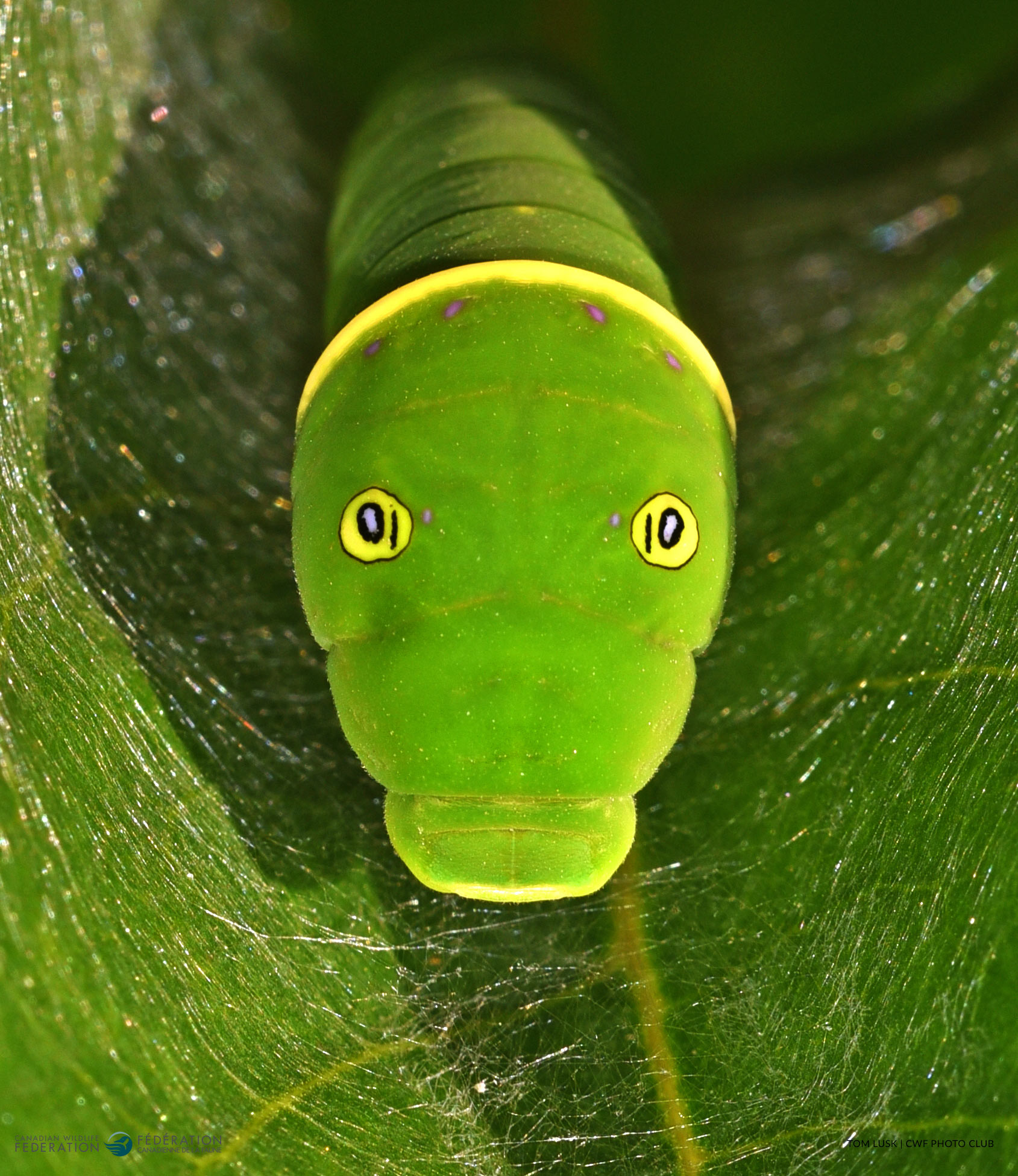
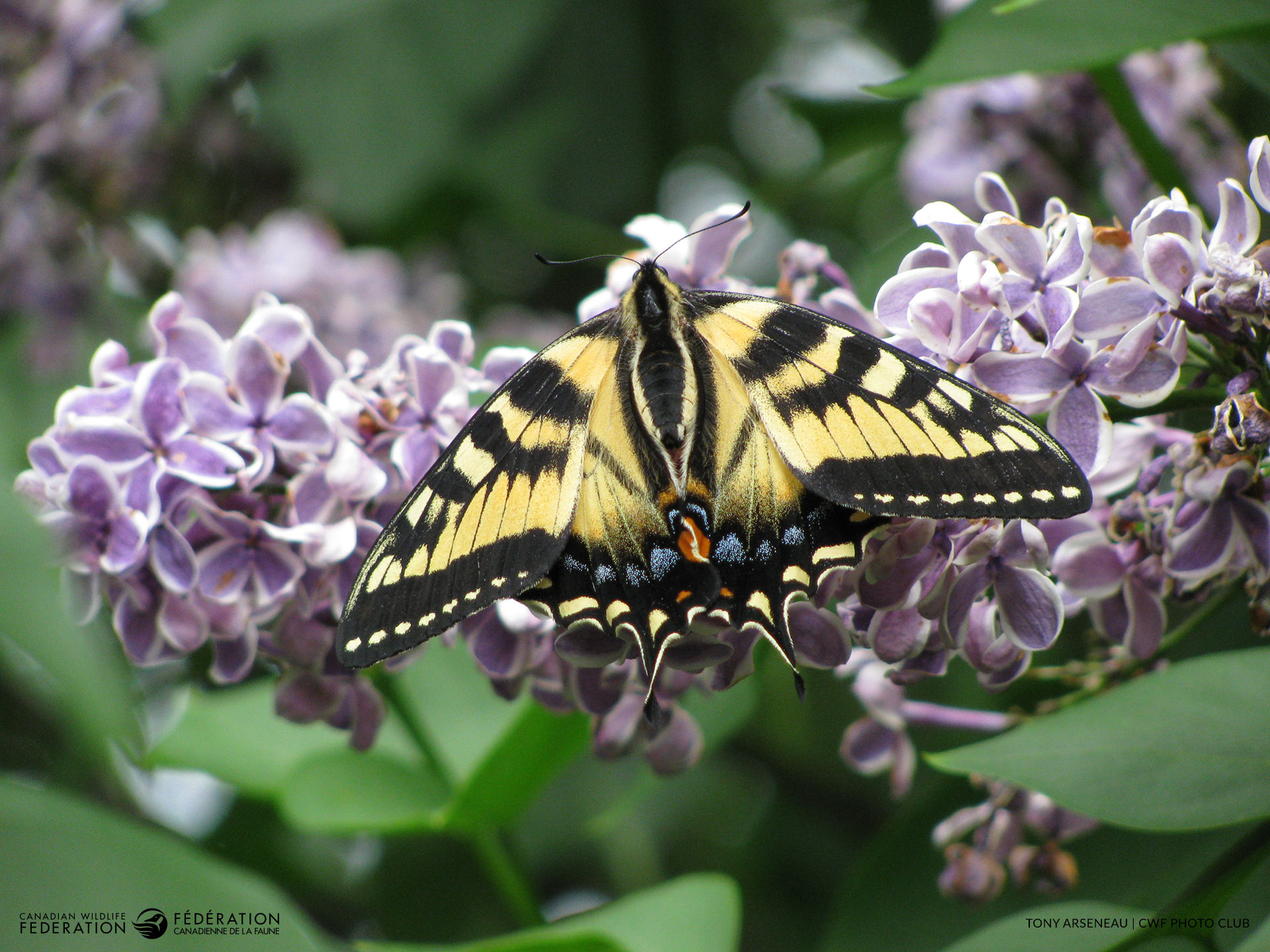
Can you guess what this peculiar caterpillar transforms into? If you guessed the native Canadian Tiger Swallowtail (Papilio canadensis), you’d be correct! When newly hatched, the tiger swallowtail caterpillar is brown and white and resembles bird droppings. However, it soon develops into a smooth green caterpillar with an enlarged area behind the head that sports two eyespots. Tiger swallowtail caterpillars like to feed on the treetops of tulip trees, cherry, willow and ash, among other species.
Once transformed, this caterpillar changes its bright green appearance to a pastel yellow with black tiger-like stripes.
Not everything you see is actually a caterpillar!
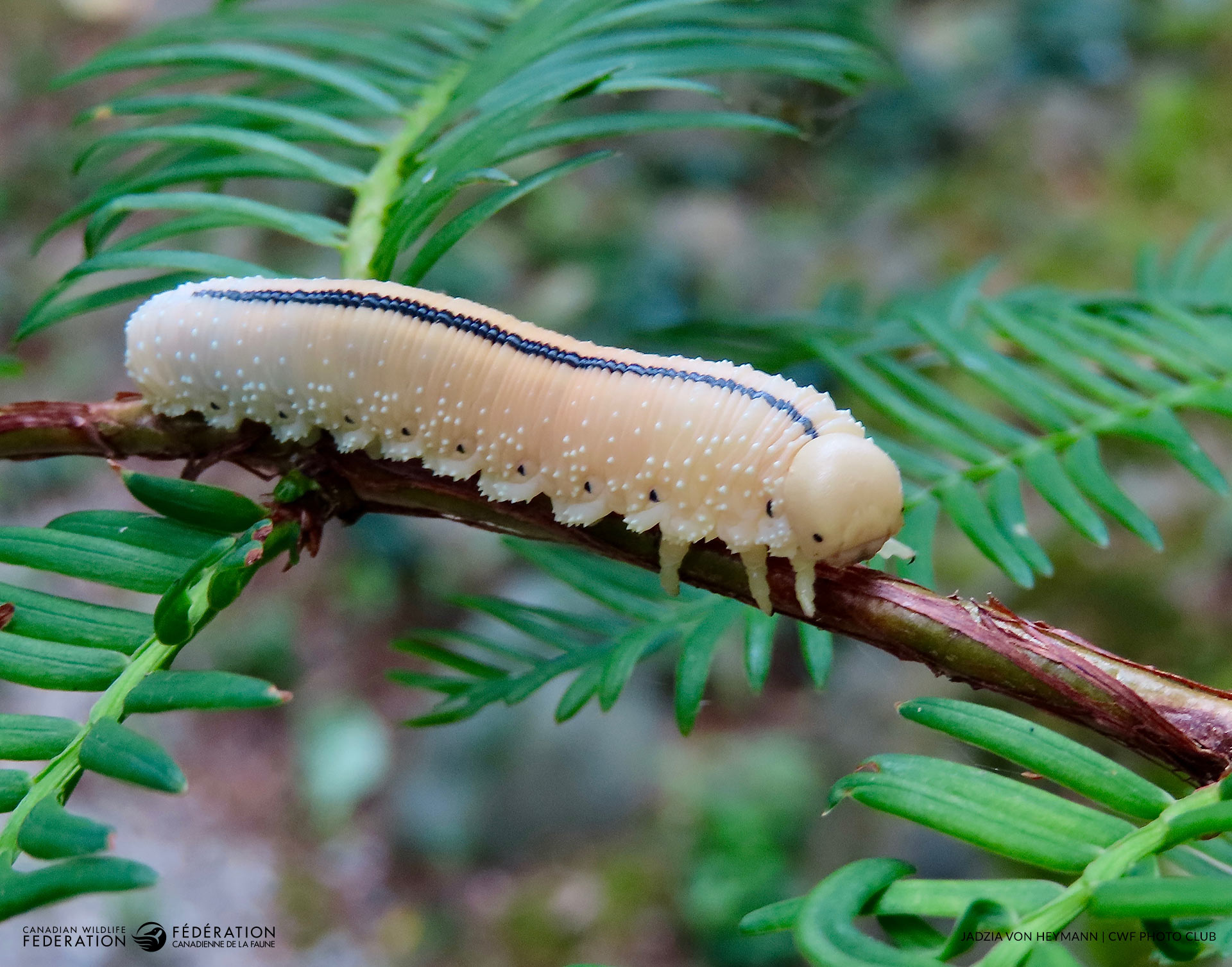
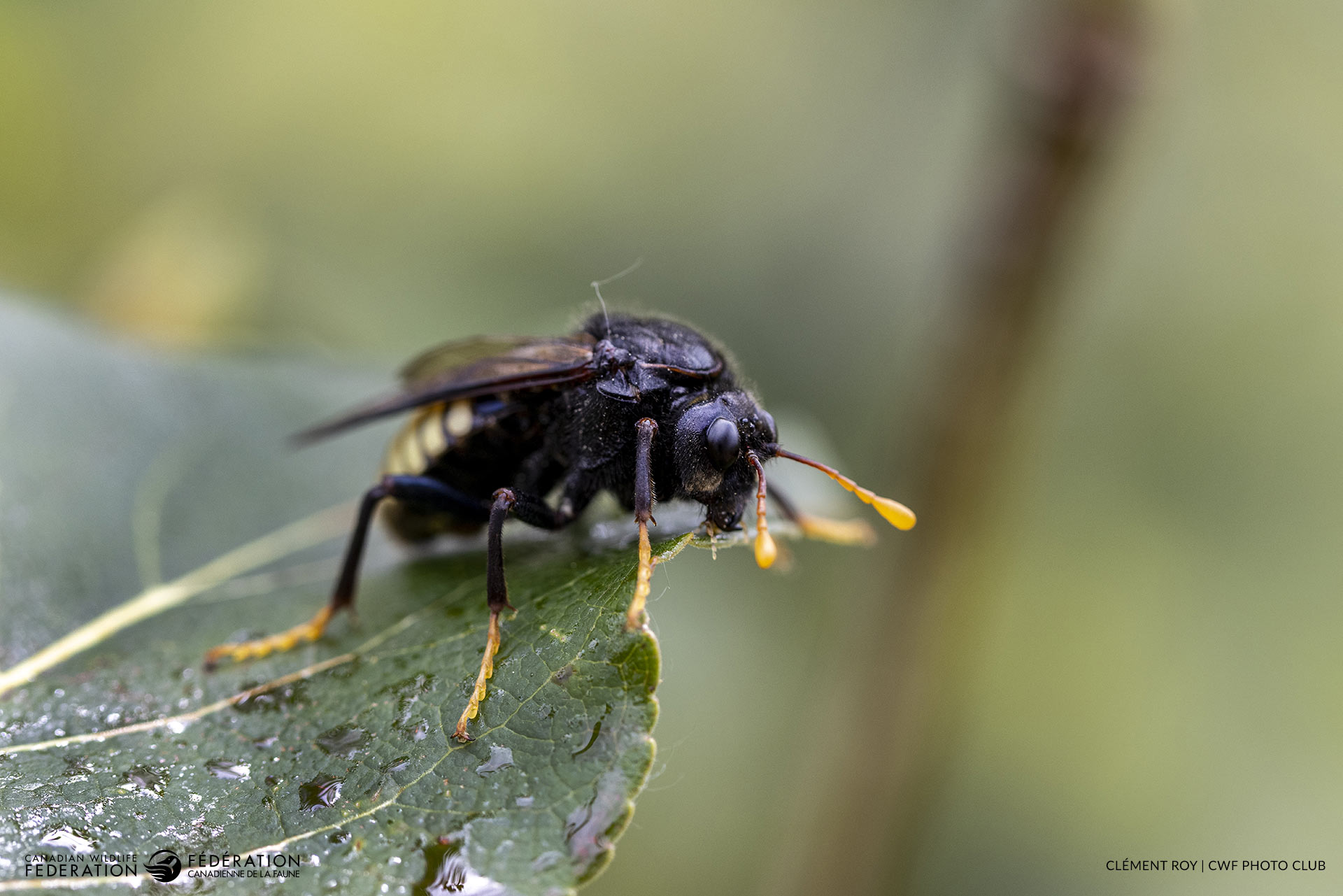
Next up we have a yellowish-white larva with a black stripe running down its back. This is known as a sawfly larva and turns into an Elm Sawfly (Cimbex americanus). Although they look very similar to caterpillars and are often mistaken for one another, this larva transforms into a wasp and is not a caterpillar!
Caterpillars in all shapes and sizes
This next caterpillar species is a vibrant green with a wavy shape. As larvae develop they go through different stages known as “instars”. They are typically green in the first instar and may change into a variety of colours in later instars like a brownish-red or they can stay green. Any guesses as to what this particular caterpillar turns into? If you guessed a moth, then you are correct! This is the Blinded Sphinx Moth (Paonias excaecata) of the Sphingidae family and can be found in most of Canada except for Yukon, Northwest Territories and Nunavut.
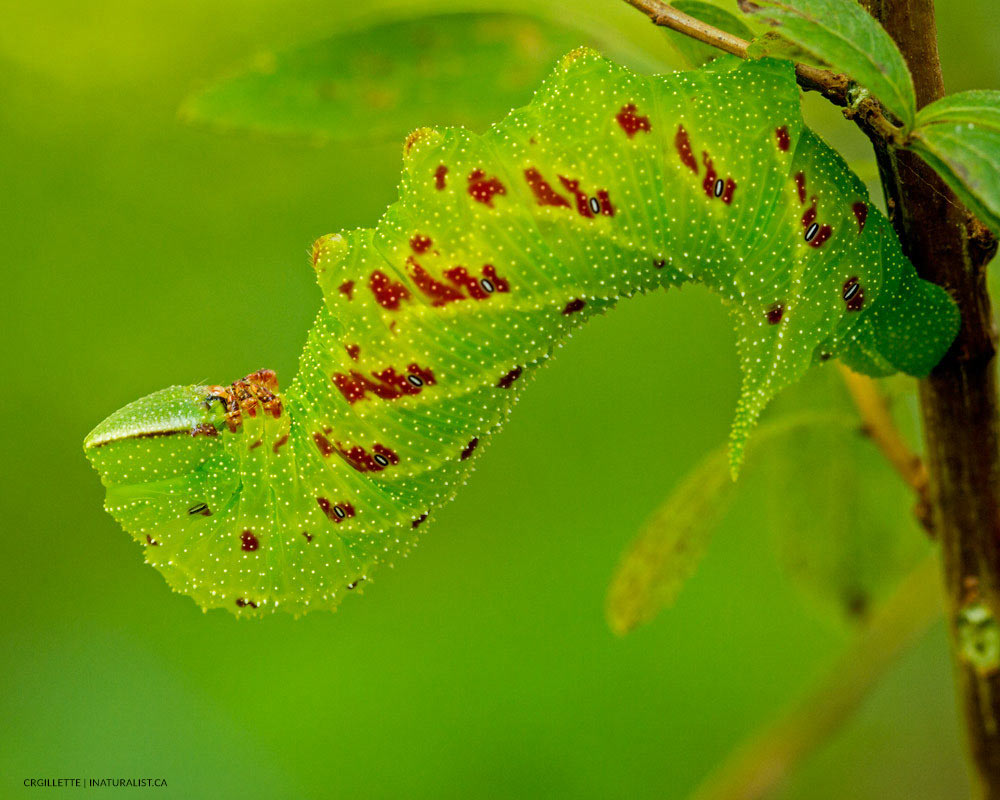
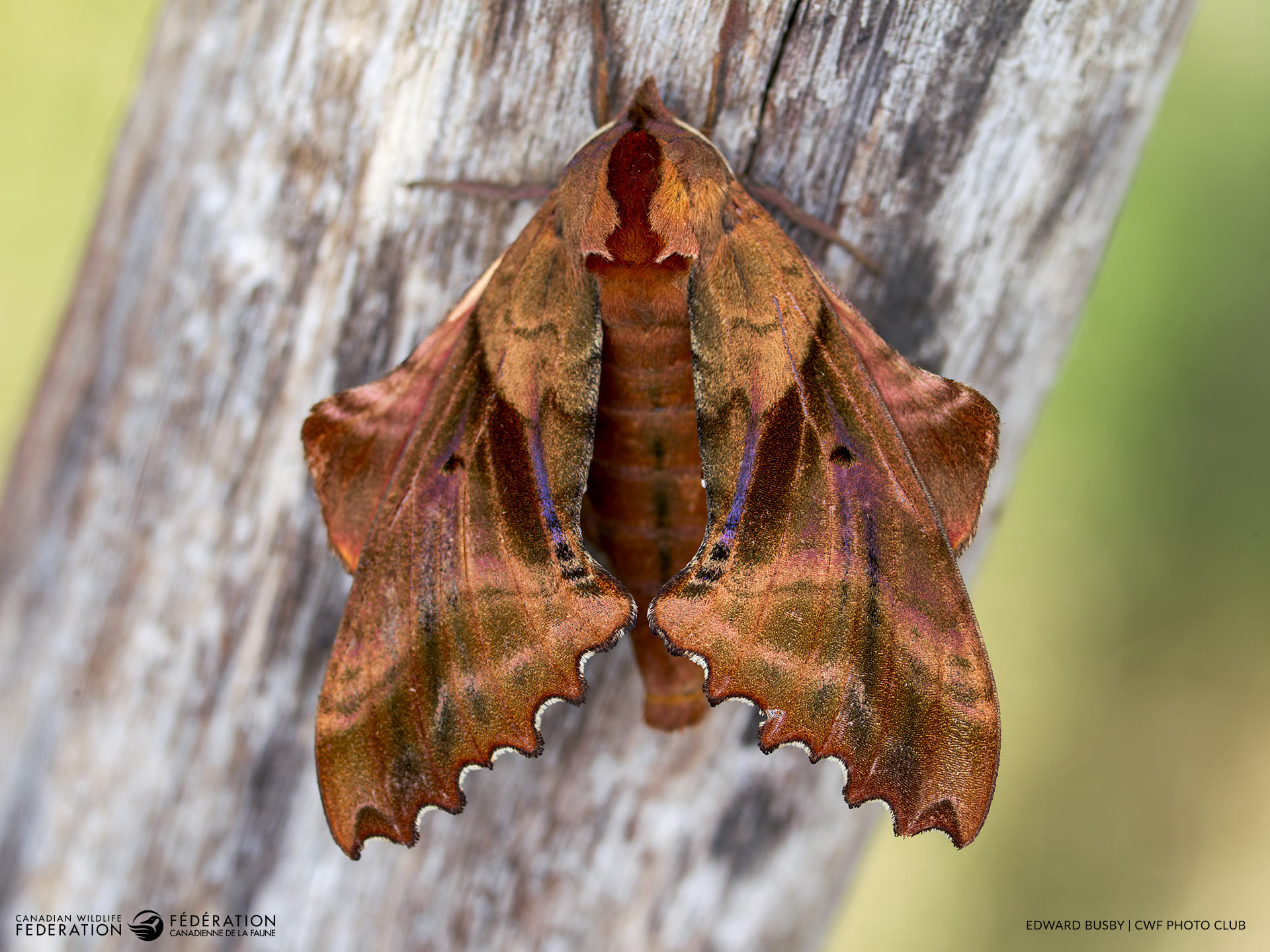
Caterpillars are fascinating insects and often go unnoticed! This summer we encourage you to look around your neighbourhoods to see what types of caterpillars are milling about! Snap a photo and upload it to iNaturalist Canada to help you identify what species of caterpillar you are seeing! Happy observing!

Brie Laird
Brie is the Communications and Marketing Manager at the Canadian Wildlife Federation. She works alongside the science and education teams to help develop and implement marketing and communications strategies. In her spare time, she enjoys uploading observations to iNaturalist to learn more about the vast amount of species in Canada.



2 comments
The cover photo isn’t a caterpillar – it’s a sawfly larva
Right you are! We feature it further down in the post under sawflies – but you are correct, should not have been the feature image! We’ve updated – thanks!