
Winter nights can feel quiet, even still. But behind the hush, wildlife is up to some pretty clever (and surprisingly quiet) moves.
Let’s meet four of Canada’s stealthiest creatures and step quietly into their world to see what silence can teach us.
Owls: Flight Without Sound
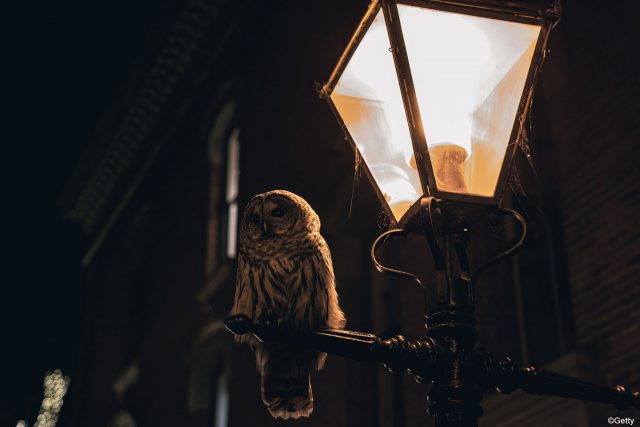
No animal embodies quiet quite like an owl. These mysterious birds glide through frosty forests without a sound. Tiny fringes along their feathers break up the air as they fly, muffling turbulence that would normally create noise. The result? A near-silent flight that allows these masterful hunters to sneak up on unsuspecting prey while relying on their remarkable hearing. This silent flight gives them the upper hand—or rather, upper wing—when hunting through the winter night.
The Art of Quiet Swimming
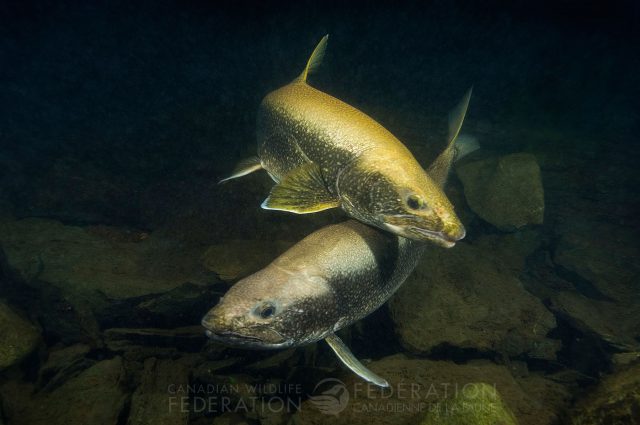
Fish aren’t exactly known for their chatter, but new research has revealed that schools of fish are even quieter than you might think. When fish swim together, they can actually cancel each other’s sound! By alternating their tail flaps rather than moving in perfect sync, a group of mackerels, for instance, creates less noise than a single fish swimming solo. This may be one reason why fish form schools. Their underwater teamwork not only keeps them hidden from predators but also helps them glide faster while using less energy. These silent swimmers prove that staying quiet is a survival strategy.
Red Fox: Winter’s Stealthy Hunter
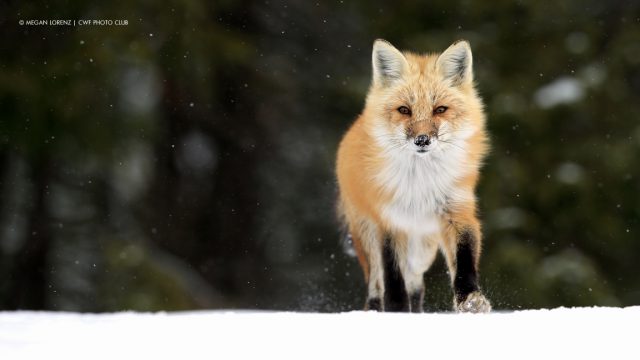
While fish rely on silence to hide, foxes use it to hunt. On a cold winter night, a red fox will pause mid-step, ears pricked for the faintest sound beneath snow or leaves. Their excellent eyesight, keen sense of smell and super-sensitive hearing give them a serious advantage when hunting. Sometimes, the slightest twitch of an ear is all it takes to pinpoint a hidden rabbit. Can you picture the classic image of a fox pouncing into deep snow? This is a common hunting tactic, used after patiently waiting for the sound of a mouse moving under the snow. Staying quiet is key to a successful hunt for the fox.
Canada Lynx: The Snowshoe Stalker
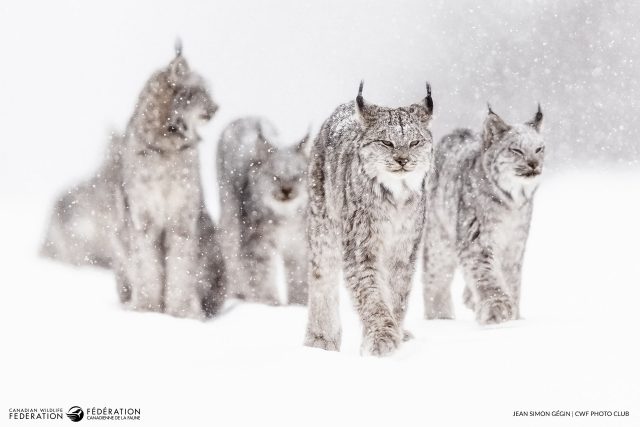
If there’s an Olympic gold medal for sneaky footsteps, the Canada Lynx would win it. Those oversized, fur-covered paws aren’t just adorable—they’re like built-in snowshoes, letting the lynx glide across deep snow without a sound. Winter hunting is all about patience and precision. The lynx preys almost exclusively on snowshoe hares and relies on its keen eyesight and acute hearing to find prey rather than following scents. Since they can’t sprint very far, the lynx is a master of stalking and ambushing; every careful step counts in this snowy game of hide-and-seek.
The Beauty of Silence

From forests to the oceans, silence is more than the absence of sound; it’s a finely tuned survival strategy. It’s the hush that lets predators hunt and prey hide, the calm that fills northern landscapes when the wind stills and snow falls.
So next time you find yourself outside on a crisp winter night, take a moment to listen. If you hear nothing at all, don’t assume the woods are empty. Somewhere in that quiet, nature is very much awake, moving softly through the shadows of a silent night.

Mikaela Capeling
Mikaela is the Social Media and Marketing Coordinator at the Canadian Wildlife Federation. She has been involved with CWF for many years - ever since her Grade 11 co-op placement that inspired her to work in the field of conservation. In her free time, you will likely find her outdoors snowboarding, windsurfing or exploring with her dog!


1 comment
Our family take a woodland walk every Christmas and this article perfectly captures the festive spirit I feel in those moments.