Owls. Spooky solitary birds of the night, hunting from their high perch to silently swoop down to catch an unsuspecting prey.
Is this true of all owls? Every rule has exceptions.
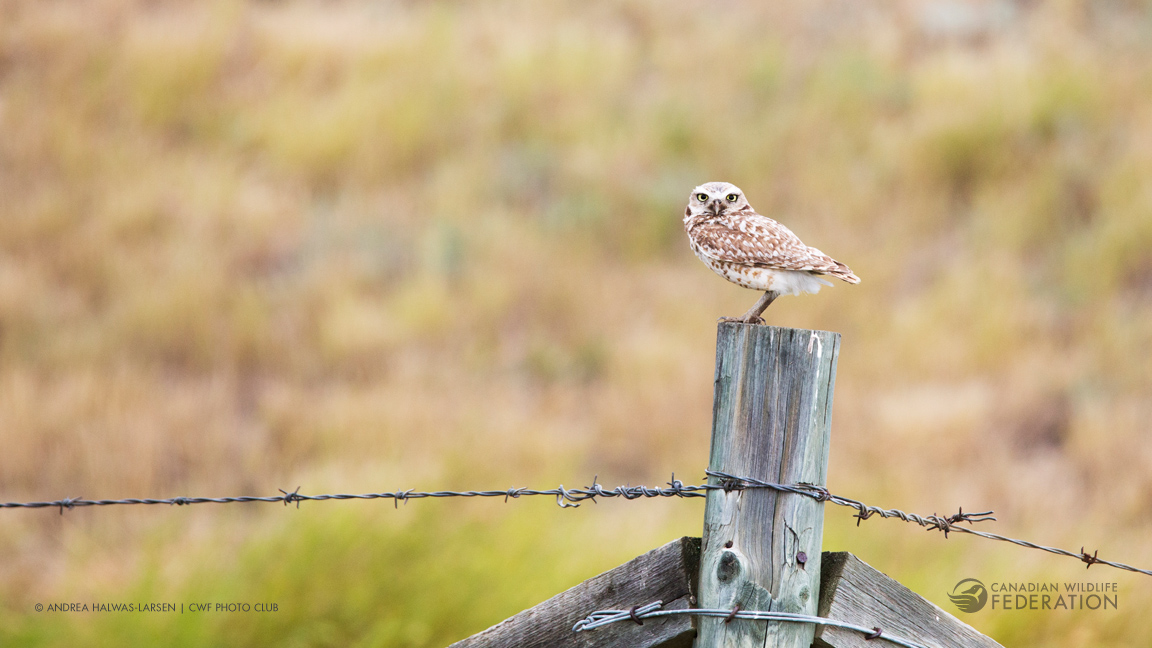
Meet the Burrowing Owl. Smaller than a pigeon, this owl lives in Canada’s flat-to-gently-undulating treeless plains or grasslands. Contrary to what its name implies, it does not burrow or dig, but unlike other owls, it nests underground, using burrows vacated by small mammals like ground squirrels, badgers and prairie dogs. This social owl may be seen standing on dirt mounds near its burrow or perched on nearby fence posts, ready to chase prey, whether it’s daytime or nighttime. This bird consumes a variety of small creatures: ground insects, small rodents, frogs, toads, salamanders, snakes, small birds and dead animals. The Burrowing Owl migrates, staying in Canada only during the summer months, generally from April to September. That’s when the access to its burrow is not blocked by snow and there’s access to food. The rest of the year, Canadian Burrowing Owls winter primarily in Mexico and the southwestern United States. Wintering owls tend to be more nocturnal, so they are not as conspicuous.
Owl’s Not Well for the Burrowing Owl
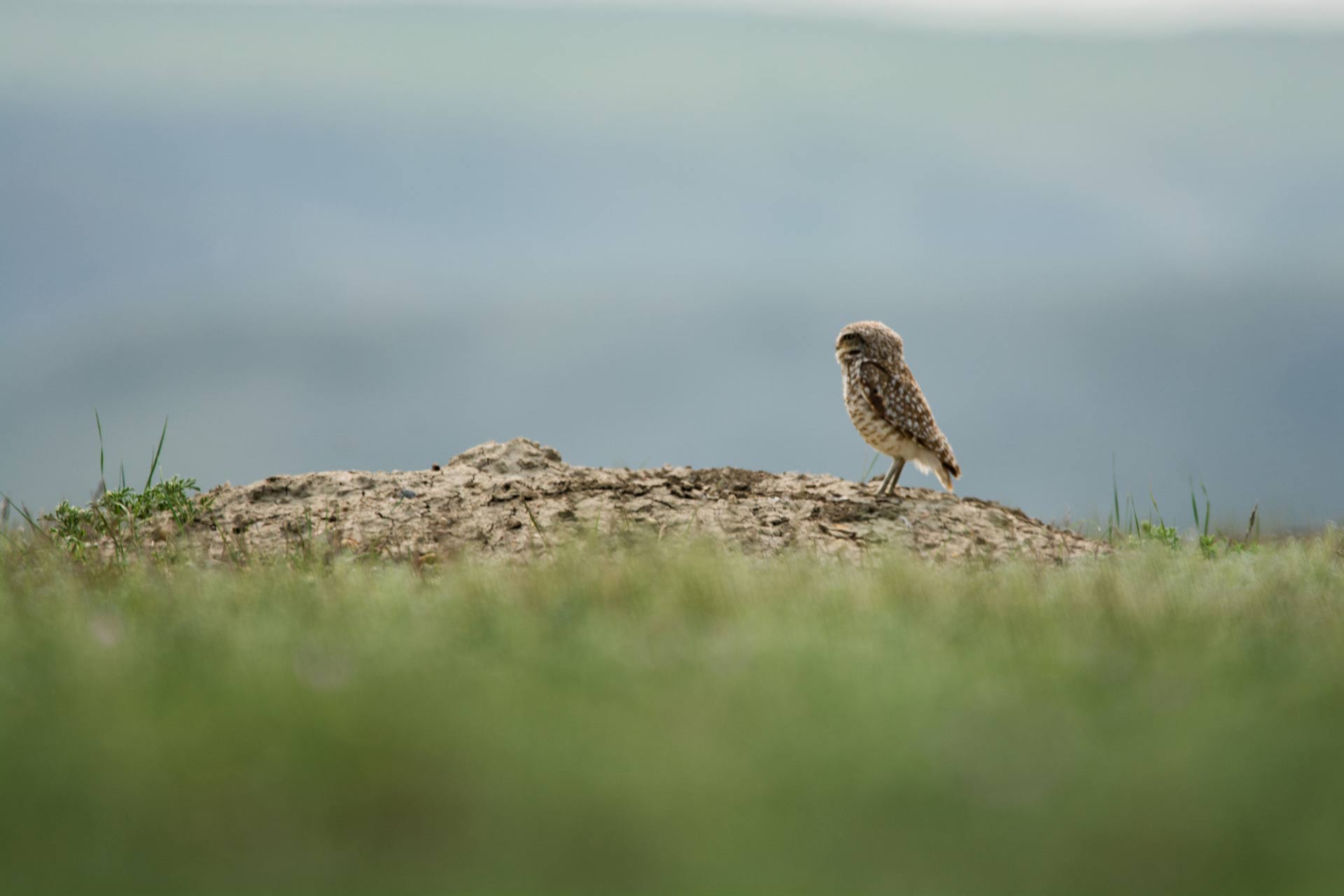
This strange owl is not faring well: it’s considered an Endangered Species in Canada. At one time, the Burrowing Owl was common in the four western Canadian provinces. Now, it is one of the most endangered birds in these areas.
The decline in population began in the 1980s and accelerated during the 1990s to an average rate of 22 per cent a year. In 1977, about 3,000 breeding pairs of Burrowing Owls lived in Canada; by the year 2000, the number of pairs had dropped to fewer than 1,000. Another 64 per cent of the population disappeared between 2005 and 2015.
The main reason is linked to the fate of its habitat, the grasslands. Much of our native prairie habitats have been converted to cropland (where the original burrowing animals are often seen as pests), and the rest has been fragmented and degraded. In Canada, less than 24 per cent of the original prairie habitat remains. If we add the effects of reductions in prey populations, climate change and severe weather, vehicle collisions, effects from the expansion of renewable energy and predation, the situation is dire. And it’s ongoing, since the decline of populations has not stopped.
Canadians Dig Deep to Help the Burrowing Owl
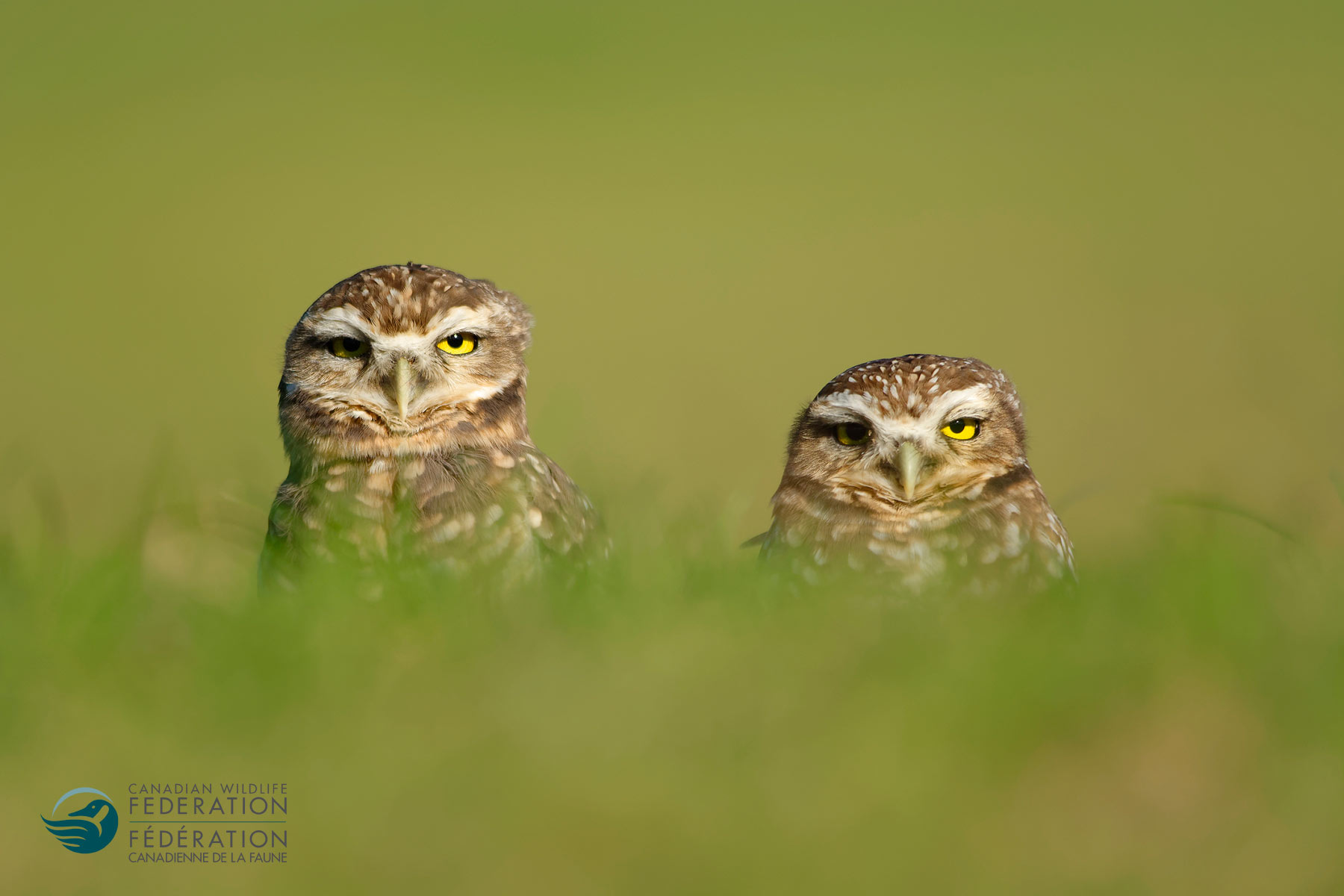
But what are we doing about this decline? Given its status in Canada, the Burrowing Owl is protected by federal law and efforts must legally be made to stabilize and increase its population. Several programs in Canada’s four western provinces are conserving habitat for this owl, studying its habits, banning the use of some pesticides and raising awareness about its needs.
In Alberta and Saskatchewan, more than 700 landowners have conserved roughly 70,000 hectares of Burrowing Owl nesting habitat. Several other methods of helping the species have also been studied, notably prairie restoration, stopping the elimination of burrowing animals, captive breeding or raising chicks in captivity to reintroduce them, surveying the population, moving individuals from other localities and installing artificial nest burrows.
There have been some successes, including the reintroduction of the species in British Columbia and Manitoba, but with roughly 270 individuals in Canada, we are far from our goal of maintaining a minimum of 3,000 nesting pairs and much more work is needed!
You can help this unusual owl in a few ways:
- Learn more about the species, including reading up on them with the Hinterland Who’s Who fact sheet and spreading the word!
- You can also learn more about their habitat by visiting Canadasgrasslands.ca. Many Canadians have never heard of the Burrowing Owl or know very little about our grasslands. The more we learn, the more we care.
- If you live in the Prairies or in the Okanagan Valley of British Columbia, you can get active with local wildlife conservation organizations. Many areas have Burrowing Owl related programs where you can lend a hand.

Annie Langlois
An avid fan of wildlife education programs, including Hinterland Who’s Who, ever since she was a child, Annie Langlois became a biologist, completing her Master’s on the Harlequin Duck in 2006. After working in Species at Risk recovery policy for a little while, she has devoted her career to giving back by helping the general public better understand our natural heritage. She has managed the Hinterland Who’s Who program since 2010.