
174 posts

Coast to Coast WhaleSafe Research Done On Porpoise
From a young age, I’ve had an obsession with marine life, constantly watching any nature documentary I could find. To this day, I am obsessed with anything dolphin and whale…
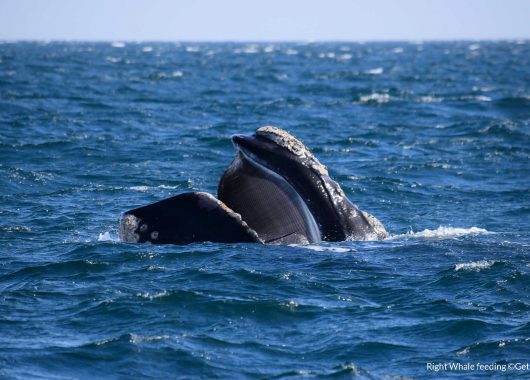
CWF’s Marine Work Forwards International Research
This summer, I had the opportunity to conduct research with the Canadian Wildlife Federation’s marine conservation science team for my Master’s project. The focus of my research was on North…
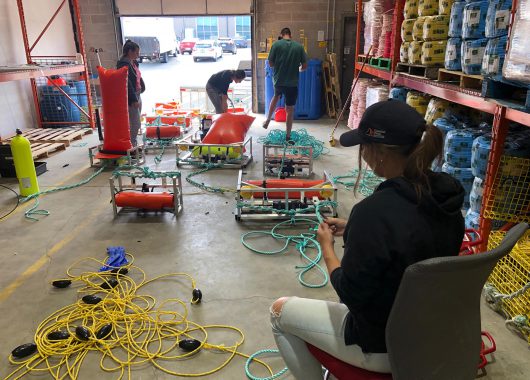
On-demand Gear in the Maritimes
The Canadian Wildlife Federation’s Marine Conservation Science team works to mitigate entanglement risk to large whales. In Atlantic Canada, there is a particular focus on North Atlantic Right Whales —…
- Coasts & Oceans
- Connecting With Nature
- Education & Leadership
- Endangered Species & Biodiversity
- Forests & Fields
- Lakes & Rivers
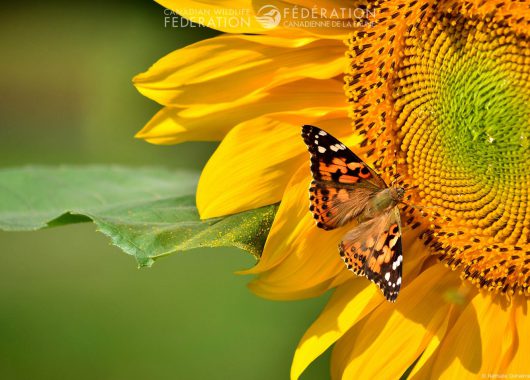
How to Help Painted Ladies
Every summer, the Painted Lady butterfly arrives in Canada after an impressive migration from warmer regions. With its bright orange wings, black tips and small eye-like spots on its hindwings,…
- Coasts & Oceans
- Connecting With Nature
- Education & Leadership
- Endangered Species & Biodiversity
- Forests & Fields
- Lakes & Rivers
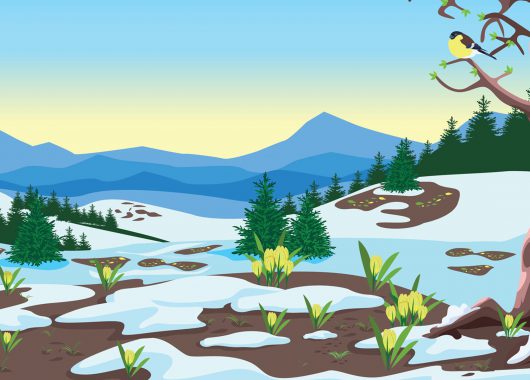
Nature-based Education in Spring: The Thaw
As winter loosens its grip and the landscape begins to thaw, April marks a time of renewed energy in Canada’s ecosystems. Meltwater flows through forests and wetlands, early plants push…
- Coasts & Oceans
- Connecting With Nature
- Education & Leadership
- Endangered Species & Biodiversity
- Forests & Fields
- Lakes & Rivers
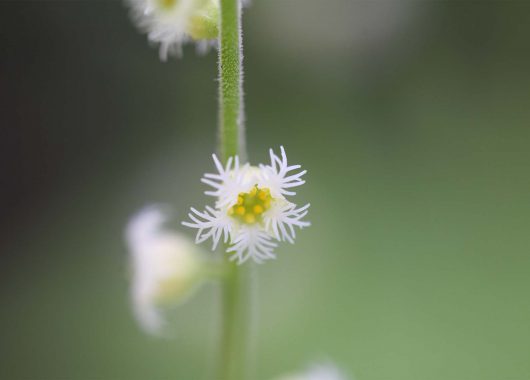
Mitreworts
Mitreworts are delightful woodland plants in the Saxifrage family. Canada has two species, Naked Mitrewort (Mitella nuda) and Two-leaved Mitrewort (Mitella diphylla), both of which are also called Bishop’s Cap,…
- Coasts & Oceans
- Connecting With Nature
- Education & Leadership
- Endangered Species & Biodiversity
- Forests & Fields
- Lakes & Rivers
Nature-based Education: Adaptation
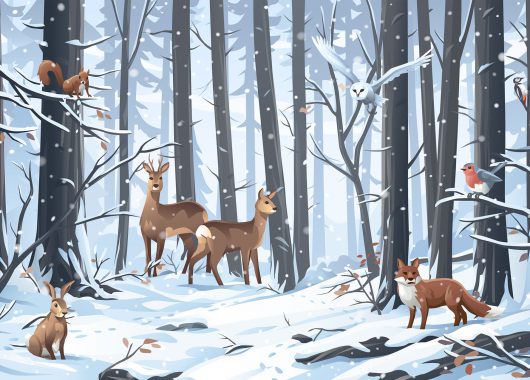
Last time, we explored how animals migrate to stay warm through winter. This time, we’re focusing on those that stay put. There are many remarkable ways animals adapt to survive…
- Coasts & Oceans
- Connecting With Nature
- Education & Leadership
- Endangered Species & Biodiversity
- Forests & Fields
- Lakes & Rivers
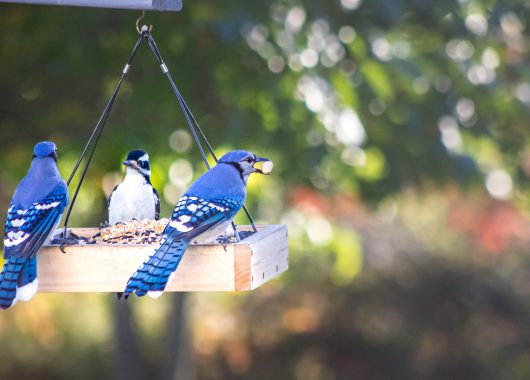
OK Blue Jays!
Three Ways to Help the Jays If you live in an area inhabited by Blue Jays, chances are, you are already very aware of it. This striking bird’s large range…
- Coasts & Oceans
- Connecting With Nature
- Education & Leadership
- Endangered Species & Biodiversity
- Forests & Fields
- Lakes & Rivers
Canadian Wildlife Conservation Report 2025
Results of Your Collaboration With Us This Year on Canadian Wildlife The Canadian Wildlife Federation spent this year collaborating with people around the world who care about wildlife. We spanned…
- Coasts & Oceans
- Connecting With Nature
- Education & Leadership
- Endangered Species & Biodiversity
- Forests & Fields
- Lakes & Rivers
The Spooky Side of Wildlife
Let’s boo this! As Halloween approaches, we start thinking about haunted houses, creepy crawlies and spooky stories. But what if the real trick is that the so-called monsters of Halloween…
