As Canadian winters deepen, American Badgers are cozy in their winter burrows.
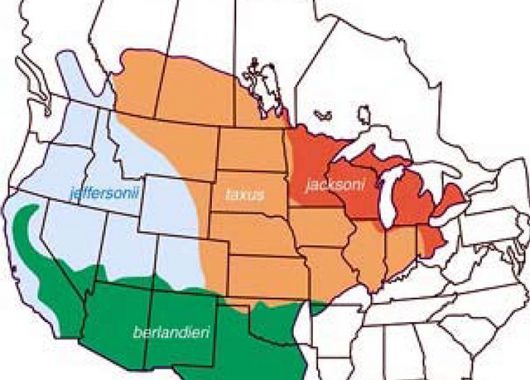
American Badgers (Taxidea taxus) are mammals found in Canadian grasslands from British Columbia all the way east to Ontario. Scientists have identified three distinct badger populations in Canada:
- Southwestern Ontario
- Kootenays/prairie/Rainy River
- Cariboo/Thompson/Okanagan
They are considered a Species of Special Concern in the prairies (sensitive to human activities or natural events) and endangered (immediate risk of extinction or extirpation) in the others. If you’ve never seen a Badger in Canada, you are not alone. Not only are they naturally elusive, nocturnal and tend to avoid humans, they also spend some of their time underground in burrows. Especially in the winter.
Hiding Not Hibernating
Unlike other northern mammals found underground in the Canadian winter, Badgers are not hibernating. They survive the harsh, cold winters in Canadian grasslands by using burrows as protection. From about November to March, they will overwinter in burrows, insulated from the cold air above. Researchers at Thomson Rivers University, the British Columbia government, and the Nature Conservancy of Canada found that winter burrows had more vegetation and more entrances than summer burrows, suggesting Badgers spend more time underground in winter. They may have as many as 15 different burrows over the winter but spend most of their time in one or two.
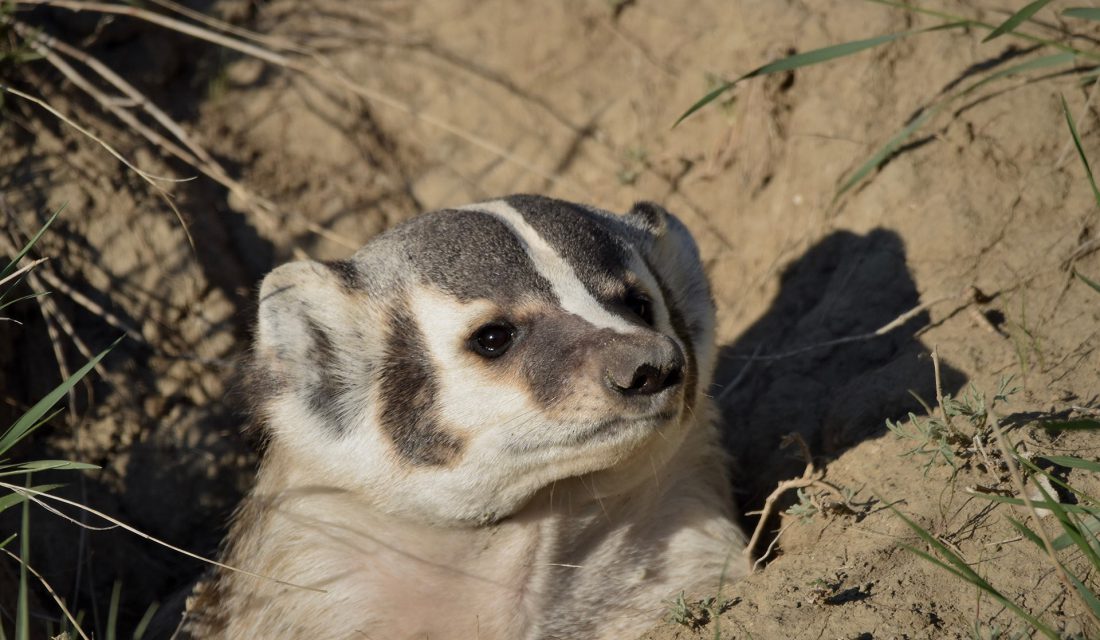
For part of the time they are underground, Badgers will enter a shallow torpor, a kind of very brief hibernation, during which their heart rate will slow by 50 per cent and their body temperature drops by 9° C. Although we don’t know what triggers them to wake up, it probably has something to do with their fat reserves; they get hungry, wake up, and head out to forage. This is a tradeoff as foraging in the cold exposed landscape will use up energy. Their food is energy-rich — commonly ground squirrels, pocket gophers, mice, and voles — but hard to find in the winter months.
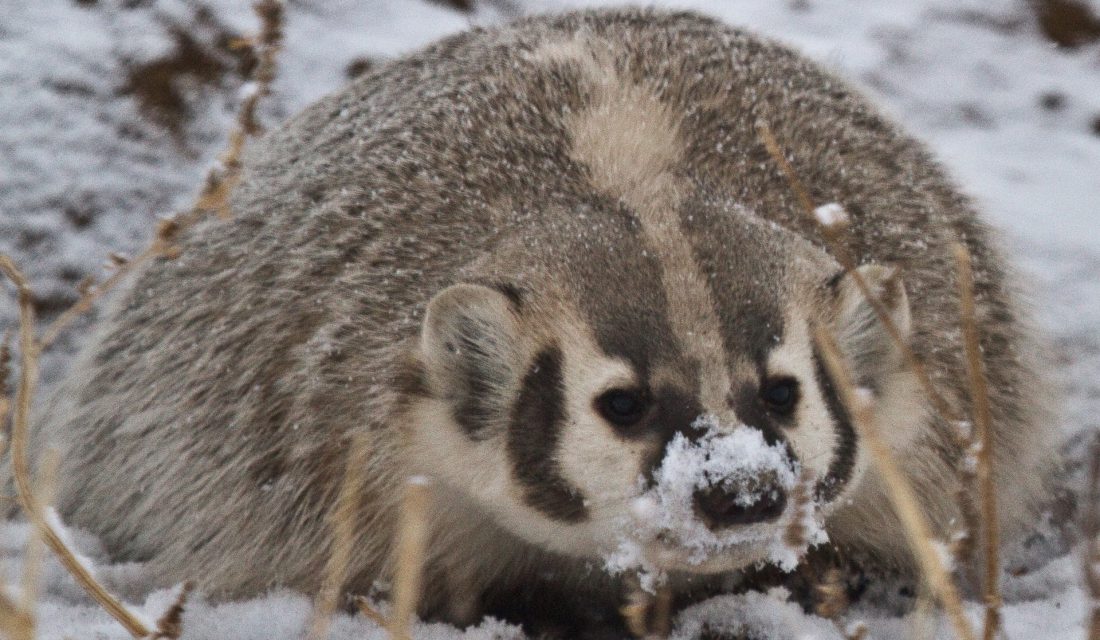
Indeed, research shows that they leave their burrows despite cold air temperatures and even despite snow depth. Driven by hunger, they emerge mostly at night, typically a colder part of the day. This is where the loss of grassland habitat in Canada affects Badgers; if grassland hunting habitat is lost, or patchy, Badgers have both fewer fat reserves going into winter, and fewer opportunities to replenish them during winter. Thus, a healthy grassland habitat is needed to support healthy Badger populations.
Building Burrows Enriches Grassland Systems
Across Canada, what Badgers do to prepare their burrows for winter benefits many plants and animals. By digging burrows and storing food (including vegetation) underground they improve the health of grassland systems by increasing water infiltration, nutrient cycling and provide homes for other animals like western rattlesnakes, burrowing owls, and swift fox. Like Beavers elsewhere, Badgers are the ecosystem engineers of the grasslands.
Conserving natural grasslands, like those needed for Badgers to thrive, is the objective of CWF’s Native Grassland Conservation program. We work with producers and landowners to help promote natural grassland habitat and support Canada’s rich grassland biodiversity, including the American Badger.
Learn more about CWF’s work with Canada’s Native Grasslands or learn more at CanadasGrasslands.ca

CWF-FCF
Our mission is to conserve and inspire the conservation of Canada’s wildlife and habitats for the use and enjoyment of all.